

YUME NO HASHIBASHI
STATUS
COMPLETE
VOLUMES
2
RELEASE
May 8, 2020
CHAPTERS
10
DESCRIPTION
Kyoko is at the autumn of her life.
She can barely recognise her own family member. But one day, someone she remembers perfectly comes to visit. Her name is Mitsu, the woman Kiyoko had a love story with. Just after the war, when they were still teenagers, they nearly did the irredeemable out of passion.
Despite a few meetings from time to time, life ups and downs separated them, but the story draws us back in the time when they couldn't imagine life without each other.
(Source: Atelier Akatombo, translated)
CHAPTERS
REVIEWS

Juliko25
Yume no Hashibashi is an understated, melancholic queer tragedy that treats its main couple with empathy and kindness.Continue on AniListThe thing I love about anime and manga is that you never know what you'll find. I came across this manga, Yume no Hashibashi, on AniList because it was on the recommendations listing for another manga I was looking up. I got curious and wound up reading it in one sitting because it was short. The story centers on Kiyoko Itou, an old woman who is dealing with dementia and can barely recognize her own family members anymore, as is typical for any old woman in the twilight years of her life. One day, a woman named Mitsu Sonoda visits her, whom Kiyoko remembers perfectly even after all these years. Sadly, not a day after her visit, Mitsu dies from getting hit by car. Kiyoko looks back on her life, how she came to know and love Mitsu, and how their lives diverged and changed in the coming decades. Yeah, I'm not gonna sugarcoat this, this is an LGBT story about two women who fell in love but couldn't be their authentic selves because of the eras they grew up in and were made to live their lives separate from one another. This is your pretty typical tragic LGBT story setup, which goes as far back as the 19th century, though back then it was due to executive mandates that forbade LGBT couples from having happy endings or being portrayed as anything but either evil, sick, or cured of their homosexuality. Yume no Hashibashi was first written in 2018, and thankfully, it doesn't have that level of subtly homophobic tragedy.
Rather, Yume no Hashibashi explores the lives these two women led in the aftermath of their first passions and how they came to be where they are, even as their time comes to an end. Interestingly enough, Yume no Hashibashi chooses not to relay the events of their pasts in chronological order. You know how in some stories, some begin with a scene of an older MC telling someone about their past, then focusing entirely on their younger selves until the very end? Yume no Hashibashi does things differently, actually starting from when Kiyoko and Mitsu are in their eighties, then going backwards: Showing them as older adults, then young adults, with the penultimate chapter showing them as high school kids right before the actual ending. I think this was a good move on the author's part, because the characters constantly talk about certain events from their past and how those events shaped who they are today, and some aspects are deliberately kept a mystery up until the end, rather than being revealed early on. I don't think I've seen many series do this, and doing it to preserve the mystery of just why Kiyoko and Mitsu did what they did until the end is actually a pretty smart move. It keeps the reader invested even as we see other events in their lives change things, like Kiyoko and Mitsu being pressured into marrying husbands or job hunting in the post-war period.
Kiyoko and Mitsu themselves are also very compelling characters who manage to carry the story wonderfully. The two of them are unique, interesting individuals with their own strengths, weaknesses, desires, and views on how they deal with the changes in their lives, both from not being able to be together as they want to how they change and grow as the decades pass. Yume no Hashibashi as a manga does a great job in gradually revealing just how these two women came to be where they are, why they made the decisions that they did, and how those decisions and mistakes affected them throughout their lives. Since the manga itself is pretty down-to-earth and realistic, nothing is dramatized or sensationalized, managing to avoid any needless melodrama. I do kind of wish we got to know some of the side characters a bit more, such as Mitsu's friend Masumi and Kiyoko's children and grandchildren, and they just felt like they were just there to advance the plot and talk to the main leads than really be fleshed out characters on their own merits. It's a shame we don't get to see more of them, but I did like what we did get, and they were still miles away from your usual anime stereotypes. The simple artwork helps in this regard as well. The backgrounds are all well drawn with no clutter, the usage of shadows, lighting, and gray space is well balanced, the character designs are distinct and down-to-earth, and I love how both Kiyoko and Mitsu are shown visibly changing and aging over the years with every chapter.
Considering the manga's overall premise, I'm sure LGBT people growing up in the modern era will take issue with the fact that Kiyoko and Mitsu's relationship ends tragically in and of itself, and I can understand why. For years, LGBT people from all walks of life were demonized, marginalized, and treated like crap just for existing, with offensive, unflattering portrayals in the media not always helping matters, especially the mandates that were forced on said depictions to begin with because of the outdated laws that were put in practice. The only scraps they could get were the stuff I mentioned above: Stories were LGBT people were only portrayed as either evil, met tragic ends, or were magically cured. For example, Americans born in the nineties may remember the movie Philadelphia, and he producers for that wanted to include explicitly intimate scenes between the characters Andrew and Miguel, but execs forced them to cut them out because prejudice against LGBT people and anyone who had AIDS was still prevalent, though that movie would be praised for being one of the first mainstream movies to normalize LGBT people. Now, in 2023, we have an abundance of all sorts of LGBT stories, from fluffy and lighthearted, to dark and angsty, to adventurous and blood-pumping, even with overzealous puritanical soccer moms complaining that the world is "pushing the gay agenda on their kids" or stupid shit like that. There's more variety, and many LGBT fans young and old are happy that they can tell their own stories, real or fiction, without fear of censorship. But this begs the question: With Yume no Hashibashi's overall nature as a story, does that make it homophobic? I don't know where I stand in terms of orientation, as I've never been in a relationship, so I'm probably not the best person to comment on this, but based on what I've read of both the manga and studies on how LGBT people were portrayed in various media across the years, I'm of the opinion that the answer is no in this case.
There's nothing in the manga that states that homosexuality is inherently bad, any homophobia Kiyoko and Mitsu do face is extremely subtle and more due to Japanese views on how women should be made to live their lives than anything, a product of the times they grew up in. Plus, Mitsu and Kiyoko do manage to live long, full lives even if they don't get to be together, and they even ask themselves if things might have been different had they been born today, with Japan now steadily becoming more accepting of LGBT people (Though not without its own problems when it comes to the journey towards getting there, as current events can tell you). I found an interesting Twitter thread last year detailing the differences between queer tragedies and stories about LGBT people being made by bigoted government/religious heads mandating that "sexual deviants" be killed off as a way of drilling into the audience that it's bad and wrong to deviate from society's values, and how some people decry queer tragedies as bad representation without taking into account the time period and contexts in which they were made. Yume no Hashibashi isn't on the level of, say, The Beautiful Skies of Houou High, where not only do all the other characters demonize the MC for her lesbianism, to the point where the MC's mother abuses her for it, but it's very much implied that the author for that series wants the readers to take the mother's side and agree with her. Gee, remember that shitshow? I don't know what Yumi Sudou's views on LGBT people are, but Yume no Hashibashi treats Kiyoko and Mitsu with empathy and sensitivity, never demonizing them for their relationship, just portraying them as people who made their fair share of rash decisions and showing how they live their lives. Yes, their relationship doesn't turn out the way they wanted, and they both die in the end, but the lives they lived were good, happy ones, and they still treasure the bond they share even if they went down different paths. So yes, while Yume no Hashibashi is in some ways a queer tragedy, it treats its characters with empathy and kindness, and doesn't make their being queer out to be an inherently bad thing.
So yes, while some aspects of Yume no Hashibashi may not appeal to modern readers, especially LGBT readers who are sick of tragedies no matter how they were made, I'm of the opinion that it's a sweet, understated drama that cares about its characters and deserves more love than it gets. It's not going to bring the house down, but I don't think it should be dismissed just because it happens to be a tragedy involving LGBT people.

moonallie
Confins de um Sonho é uma tragédia irresponsávelContinue on AniListDesde sempre, donos de si e do que está ao seu redor, homens foram aqueles que decidiram os rumos da sociedade, aqueles que mandam em casa, aqueles que, quando confrontados ou insatisfeitos, têm o direito de se levantar contra ela. Em uma situação “extrema”, podem até mesmo usar a força. Será que, por isso, eles simplesmente não conseguem compreender a tragédia de nunca ter tido direito nem mesmo sobre si mesma? A dor “invisível” de estar sempre submetida ao que decidem por você? Aos diversos abusos “silenciosos” que, até hoje, são normalizados, como o abuso matrimonial? Confins de um Sonho narra a vida de duas mulheres lésbicas que, aos 85 anos, ainda se entristecem por nunca terem podido consumar o sentimento que uma tinha pela outra em vida. Em um momento, pela posição que a sociedade as colocou desde o nascimento; em outro, por um casamento indesejado; e agora, ao final da vida, por uma doença que busca tirar de você o direito até mesmo às suas memórias. É interessante, inclusive, que a história seja contada sob o funcionamento do Alzheimer: as memórias mais recentes da protagonista sempre dão lugar a uma mais antiga, e então a uma mais antiga, e seria assim até o fim da sua vida. É uma perspectiva diferente, que ajuda muito não só a reforçar o tom melancólico do mangá, como também a relatar os problemas que acompanhavam o ato de ser mulher, principalmente uma mulher LGBTQ+, no Japão ao longo do século XX. O gibi escolhe contar sua história de forma extremamente crua. É algo bem sincero, tão sincero que, às vezes, parece até mesmo uma denúncia das violências normalizadas que elas sofreram ao longo da vida. E, honestamente, acho isso algo bom. É necessário ter em mente que essas tragédias NÃO FORAM e NUNCA VÃO SER compensadas, e o mínimo que temos que fazer é nunca permitir que essas memórias sejam apagadas, que cada possível tragédia seja lembrada para que, ao menos, nunca deixem que ela se repita. Não dá para só viver de um positivismo em que as principais dores já passaram e agora vamos todos dar as mãos e viver uma vida melhor e feliz! Lembrar e reiterar que isso é uma mancha na vida de diversas pessoas, que não têm outra escolha a não ser conviver com a violência sofrida pelo resto da vida e seguir apesar disso, é tão importante quanto progredir. É algo que permite que não saia da nossa cabeça o quão pesados foram esses acontecimentos. Mas, infelizmente, abordar algo sob essa ótica quase visceral exige muita responsabilidade. É difícil não cair em uma armadilha na qual se acaba romantizando pensamentos que, por mais que sejam muito sinceros e que, na ótica de uma vítima, sejam extremamente justificáveis, ainda são apenas ferramentas de fuga ou acabam sendo danosos à própria vítima, retroalimentando um sentimento de culpa ou qualquer coisa do gênero. O momento em que as protagonistas escolhem se suicidar representa muito isso. É algo tão sincero — o sentimento de que nada pertence a você, apenas a sua dor, a de agora e a que você já sabe que vai sofrer pelo resto da vida — que leva as duas a enxergarem que, pelo menos, deveriam ter a agência de encerrar a própria vida no único momento em que têm alguma perspectiva de felicidade. É algo muito real. Em nível pessoal, é até próximo de mim, e eu vejo a boa intenção em representar e falar sobre isso. Porém, pela estrutura da história ser reversa — o que faz com que os capítulos passados não possam ser explícitos demais quanto ao que já aconteceu, para não estragar a surpresa, e que os capítulos futuros também sejam incapazes de lidar com a problemática que, cronologicamente, veio depois —, esse momento (e também a cena em que Kiyoko relata um abuso matrimonial de forma extremamente leviana) fica restrito a um espaço de tempo que não é suficiente para abordar, com a sensibilidade necessária, um sentimento tão pesado. Também me incomoda que a conclusão tenha me parecido quase uma ode a esse momento, como se o mais significante e belo das duas fosse justamente isso. Quando, na verdade, a dor do mindinho que as duas escolheram perder juntas já representava a mesma coisa. Para mim, pareceu mais uma romantização do suicídio como uma saída bonita e poética, o que pode até soar assim para uma vítima — só não deveria soar assim para mim, a leitora. E esse, para mim, é o maior problema do mangá. Até porque ele não me permite ter tantos outros: eu gosto das duas protagonistas, gosto da relação que elas criam entre seus desencontros, acho que a narrativa do mangá é bem pensada para representar a dor das personagens até na forma como a história nos é contada, e vejo boas intenções nele. Mas, dessas, infelizmente, o inferno está cheio. É muito triste terminar uma história de tragédia com uma mensagem que mais me parece ser: “Ei, suicídio é muito foda e bonito, cometa!”, quando essa tragédia é, principalmente, um relato bem realista sobre um tipo de violência que levava e leva diversas vítimas a cometerem o mesmo. Óbvio que é uma obra adulta, e um adulto deve ter faculdades mentais para não se matar por causa de um gibizinho. Mas ser um josei não retira dela a responsabilidade de tratar temas tão pesados como esses de forma menos leviana.- </center>~~~
COMMENTS
0 Comments
SIMILAR MANGAS YOU MAY LIKE
 MANGA DramaMy Broken Mariko
 MANGA PsychologicalWalk Wit Me
 MANGA DramaLove My Life
 MANGA DramaHoutai Shoujo Kikan
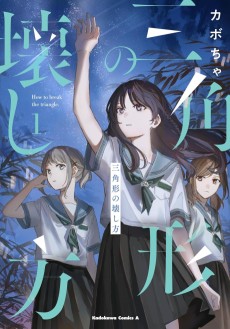 MANGA MysterySankakkei no Kowashikata
SCORE
- (3.95/5)
MORE INFO
Ended inMay 8, 2020
Favorited by 234 Users