

THE GUY SHE WAS INTERESTED IN WASN'T A GUY AT ALL
STATUS
RELEASING
VOLUMES
Not Available
RELEASE
April 10, 2022
CHAPTERS
Not Available
DESCRIPTION
Fashionable and upbeat high schooler Aya falls head over heels for an employee at a local CD shop. He's got an air of mystery about him, great style, and an impeccable music taste. Little does she know—this supposedly male employee is actually her female classmate Mitsuki! Mitsuki generally keeps to herself, but since her seat is right next to Aya's, she can't help but be extremely aware of the other's crush. Revealing the truth is out of the question for Mitsuki—but perhaps getting closer to Aya wouldn't be so bad...
(Source: Yen Press)
CAST

Mitsuki Koga

Aya Oosawa

Joe

Kanna

Megumu Narita
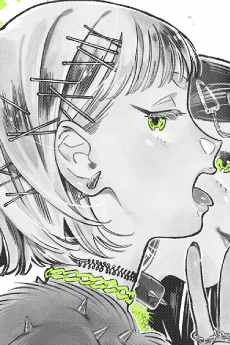
Chizuru
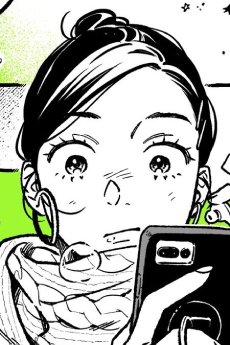
Mao
CHAPTERS
RELATED TO THE GUY SHE WAS INTERESTED IN WASN'T A GUY AT ALL

REVIEWS

melamuna
The Power of Loving someone through linked interestContinue on AniList
_How do two people fall in love?_

It's a question that seemed easy to answer due to its quantifiable results from people's experiences. People would often say that the first reason they fell in love with a person was a combination of the person’s attractiveness and/or determination to do their work. While these traits are justifiable for falling for someone, it is not generally a realistic guarantee for a successful romantic connection to win someone on the receiving end of romance.
For most people, romance comes in unexpected ways, whether it's a location where you wouldn't expect to develop intimate and blossoming romance, like behind a supermarket, or a hidden passion that you hide and protect from the biases and criticisms of society. Having a shared interest is the reason why people bond with each other, but not everyone else is lucky to have an immediate bond with someone unless there is a fortunate circumstance equal to the effort of pushing to create a bond.
This manga series presents this realistic and deeply intimate take on romance by Mitsuki Koga and Aya Oosawa and their slow and blossoming romance shared by their interest in music.

Music connects and divides people at the same time. Music is one of the most popular forms of expression for people to find things that fit their moods at the moment. However, music has genres with different styles of instruments, enunciations, lyrics, and moods. Variety is often a good thing because it serves different kinds of artforms and expressions for different types of audiences, but this can also develop a prejudistic viewpoint or ignorance toward the other genre, which can have effects on people who listen to said genre. This is the dilemma of Koga and Oosawa, as they kept their music taste to themselves in order to not be ridiculed by the people around them. Until one day, their paths crossed and their interests aligned. Even though they basically sit next to each other at school, the metaphorical distance they have to each other is rather far but gradually gets closer and closer the more they interact with each other.
The manga is a slow and blossoming adolescent romance that's entertaining and engaging to read. They have their inner quirks and turmoils sprinkled with the usual “will she, won't she” trope, and yet you can feel and relate to the character’s frustrations and inner conflicts. The series is in the Yuri genre, and if you are not a fan of this genre, I think this series can definitely convince you because of how seamless the romance feels sometimes. Other than the romantic aspects, the main characters are compelling, and you root for them to step out of their shells and fully embrace their passions for music. You get to see these characters grow from their inner selves despite their contrasting personalities, build themselves, and grow as people.

If romance is not your cup of tea, you can also enjoy this series as a music manga. One highlight of this manga is the exploration of rock music, which is a trait that is slowly phasing out in the manga scene. The appreciation and bonding of real bands such as The Foo Fighters and Radiohead radiates through the manga. If you are a fan of stories appreciating music and a music fan itself, this is a great read.
If romance or the music aspect is not your cup of tea, then the art style can definitely get you reading. The manga has this unique trait of meticulously using the color green as a contrast to the whites, blacks, and greys. When combined with the amazing artstyle by Sumiko Arai, you get an addicting and attractive multiple manga panel that is truly one of a kind.

This is a fairly short manga that contains around 4 pages per chapter. This manga is a high recommendation for me if you're a romance junkie, a music fan, appreciate unique and wonderful art styles, or a combination of all three. ***

kiiro
Why green yuri could only be greenContinue on AniListforeword
Small thesis I originally wrote for a translation and localization uni seminar. It somehow got graded without ever actually being read lol, so I'd rather not let it go completely to waste and publish it somewhere.
It is definitely closer to a short essay/analysis than a proper review, but I thought anilist would still be a fitting place for it.
Also, other than translating it from Italian, the original version was obviously written in much more academic language, I removed most of that here and kept the parts that I think could be actually interesting outside of a uni paper.__Why green yuri could only be green__ Some manga are immediately recognisable because of their characters or art style, but then there's Kinioto, where sometimes all you need is a violent bright green over black-and-white panels.
Even people who have never read it may have come across it somewhere: random panels online, fanart, or simply someone's tweet referring to the series as green yuri and expecting everyone else to immediately understand what they mean.
The nickname might ironically be the best possible, and most interesting, point about the series. It manages to reduce the manga to two words without flattening anything about it. It is, obviously, yuri and it is, obviously, very green. Though the meme might hold more impact than expected.

Yuri, but not quite in the way it used to be
It really is one of those terms that feels obvious until you actually try and define it.At its broadest, it simply refers to stories centered around emotional, romantic and/or sexual relationships between women, but the genre has never had a perfectly fixed definition, therefore what readers expect from it has changed considerably over time.
Female same-sex intimacy has been present in Japanese fiction for much longer than we expect, older works could place an enormous and intense emotional importance on relationships while still leaving them along the lines of a friendship-admiration-romance conundrum. Sometimes on purpose, or sometimes because ambiguity was an easy way around social conventions. Contemporary yuri, on the other hand, is generally much more comfortable allowing romance to just simply be romance.That doesn't mean that every modern series turns into a story explicitly about identity, coming out, discrimination, sexuality etc. and, in fact, many do not address those subjects at all. What radically changed is the genre becoming broad enough to accommodate various tones and settings without having to justify the existence of the relationship at its center. Comedy, fantasy, slice of life or romance, the two girls falling for each other are not the entire premise anymore.
Aya discovering that the cool guy is, in fact, a girl from her class is indeed the initial hook, it is almost inevitable, but the story does not spend much time behaving as if attraction between them is something that needs to be perpetually explained. Once the initial premise is established, it just brushes it aside and lets Aya and Mitsuki's relationship develop on its own terms: which places the manga within the most contemporary version of GL.

One of the things that makes the green yuri especially interesting, and unique, is that its visual identity and storytelling were firmly shaped from the beginning.
It originally, and still, appears weekly on Twitter in four-page chapters posts, and that limitation affects the way scenes have to be built. There's little space to establish a situation, let alone develop it and still leave something memorable enough to make it feel complete.
A more conventional chapter might spread across a number of pages, while Kinioto becomes exceptionally good at making small moments feel significant, but not because the moments themselves are necessarily dramatic, the format itself is "giving them space" to become dramatic.
This is also how and why so many panels work incredibly well even when removed from their original context. A single screenshot can go around twitter and still be perfectly told apart the other ones, because of the way the format was already designed: short, concentrated scenes that had to stand out on the timeline.That's also where the green is not just decoration. It might be obvious and redundant at this point, but the latter is why it's impactful and interesting.
The green makes the page instantly look more recognisable, it matters inside a social media feed: photographs, coloured illustrations, black-and-white manga panels, and then Arai's page hits you before even read the name of the account that posted it.
Over time, that turns green into something much closer to branding than a palette choice.The format and colour complete each other
We already said how the four-page format is effective, but it can also create a simple problem: repetition.
Same characters appear constantly, many scenes take place in the same spots, the convos repeat. No strong visual system and these short chapters built around similiar situations can begin to feel flat.
While the green gives each page another layer, can firmly separate characters, frame faces, isolate objects, highlight details, or draw the eyes towards the part that matters the most in the composition.Not to mention that, honestly, Mitsuki has simply a very good design. Dark clothes, band shirts, piercings, headphones and kinda messy look, everything feels on line with the setting and strongly contrast nicely with Aya's typical gyaru style. And the limited palette just helps make that contrast even stronger.

Why is green yuri such a perfect nickname
At some point, everyone started calling the series green yuri, and the name obviously stuck. The official title is fun and memorable, but long, on the other hand the nickname is just two words and manages to communicate a surprising amount.
You immediately get to know what kind of relationship is at the center of the story and know which visual feature distinguishes it from everything else, though that only works because of how strongly its visual identity supports it.
You could try and refer to other series as "music yuri", "school yuri", "insert random word yuri" but it just wouldn't hit as the green one does.
The fandom managed to successfully transform the stylistic choice into a second title through a meme, which might be appropriate for a series that has to survive mainly through the circulation of its images online. Many, if not most of the readers must have stumbled upon individual pages or uncontextualised panels before encountering an actual chapter or collected volumes, recognised the palette before the official title and saw and remembered Mitsuki before knowing anything about the actual plot.What I really like the most about Kinioto is that none of its individual aspects would work nor be especially revolutionary on their own. Yuri is not new, four-page chapters are not new, limited palettes are not new, neither is rock, masculine girls, gyarus or the polar opposites trope.
What feels special is the way all those elements reinforce each other instead of passively coexisting.The twitter format encourages short scenes that need to be immediately recognisable, the scenes benefit from the clear and neat composition, and the green creates exactly that kind of clarity while making the pages recognisable in a feed. The characters' design work perfectly within the palette, while the rock aesthetic gives that design a believable context and provides an easy bridge between Mitsuki and Aya.
At the same time, the way the relationship is set fits within a form of comfy contemporary yuri that does not need to stop and justify why two girls might be attracted to each other.
Then the readers come in: omg it's green yuri.
Can't say anything else but for it to be more than completely accurate.It's not a gimmick, a gimmick can be removed while the work remains mostly intact. Would the story still exist without the green? Yes, but the way the manga presents itself, goes around online and sets in the readers' memory would change considerably.
Limitations become style, style identity, and identity becomes strong enough that people on the other side of the world don't even need the real title anymore. They just call it green yuri.
I personally fell in love with this manga through its design and simply because of the story itself. I have been tapped in yuri and romance for years, but I consider this the most interesting to look at beyond the romance itself, whether through art, format or hisotry of how it developed. Although, that being said I don't feel like it deserves a perfect score. Lately the storyline is a little all over the place, it almost feels like it lost the spark that made me so invested in the first place; as it has inevitably grown, and started to feel more serialised. I am simply not as hooked as I was, when I used to wait eagerly for every Sunday update. I still profoundly love Kinioto and I think it deserves all the recognition it currently gets, but right now I find myself more fascinated on its technical aspects than by where the story is going.
COMMENTS
0 Comments
SIMILAR MANGAS YOU MAY LIKE
 MANGA ComedyTamen De Gushi
 MANGA DramaKuuden no Himegimi
 MANGA DramaBloom Into You
 MANGA RomanceKase-san and...
 MANGA ComedySCHOOL ZONE GIRLS

SCORE
- (4.1/5)
MORE INFO
Trending Level 4
Favorited by 4,873 Users