

THE STELLAR SWORDMASTER
STATUS
RELEASING
VOLUMES
Not Available
RELEASE
September 19, 2023
CHAPTERS
Not Available
DESCRIPTION
The so-called “Lighthouse of the North,” the prosperous trading town of Schoarra, hides a dark underbelly: seedy slums ruled by five ruthless crime bosses. When streetwise orphan Vlad finds the brothel he works for decimated by a disgraced knight, he turns to the path of the blade, pledging himself to the pursuit of power by sword. Blessed with the ability to seek wisdom from his sentient sword, Vlad embarks upon a journey of growth and peril as swordsman in service to the powerful House Vayezid.
(Source: WEBTOON)
CAST

Vlad

Josef Vayezid

Jemina

Alicia Hynal

Zayar

Daejangjangi Noin

Marcella

Godin

Rutger Vayezid

Oksana Vayezid

Jorge

Haven

Aghe

Ramund

Gregory

Gott

Yustia

Anna

Mirshea Dragulia

Peter Vayezid

Pablo

Othar

Oepari Jack

Dice

Geomeun Gom
CHAPTERS
REVIEWS

presence
the greatest aura farmer of todayContinue on AniListAnton Chekhov is widely accredited for originating the principle of Chekhov's gun, which today is simply considered to be a form of a plot twist (the "gun") that is introduced early on, but only becomes relevant later (when it is "fired"). This is, in fact, a modern interpretation of Chekhov's rifle, the name given to a literary principle that was included in Chekhov's advice to young aspiring writers, in which he stated that every element of a story should have a purpose, and that any unimportant details should be discarded.
"Remove everything that has no relevance to the story. If you say in the first act that there is a rifle hanging on the wall, in the second or third act it absolutely must go off. If it's not going to be fired, it shouldn't be hanging there."
—Anton ChekhovI have been thinking a lot about why Star-Embracing Swordmaster is so popular and highly regarded amongst its fans. At a glimpse, it's just another manhwa set in a vaguely medieval D&D-inspired era, where almost every story element seems to be inherited from Naruto, including the premise: orphaned at a young age and possessed by a powerful disembodied spirit. The only unique aspect of Star-Embracing Swordmaster seems to be that aura farming every 5 chapters is absolutely indispensable.

But as you read more of Star-Embracing Swordmaster, you'll realize that Dae-Ui Hong is one of Chekhov's most devout students. Rarely is a panel wasted, a character mentioned, or a plot thread woven without braiding itself into the web of the overarching narrative. Hong treats the hero's journey as less of a checklist and more of a mosaic, one in which various pieces are constantly intersecting and altering the final story. Just as the the protagonist is shaped and moulded by those around him, he also draws them into his life and his story, inexplicably intertwining their fates and cementing their place in his world.
Hong also brings the supporting cast to life in such a way that many of the characters could be capable of being the protagonist of their own story. He chooses to show rather than tell, allowing reader to make their own conclusions on a character's history based on the their demeanor, actions, and thoughts. A great example of this is Rutger's crew: the character design of his mage is clearly intentional, and hints at a past that only the two of them share, but this history is intentionally left a mystery. There is no absolute evil, nor absolute good; chivalric knights stand on both sides of every conflict, and Hong spares us no lack of historical political drama in between the major conflicts. Of course, this also means that there is no shortage of aura farming from the ensemble cast.

Our protagonist, Vlad, is a young orphan who desires power due to the tragedy he experiences in his youth, and his story is primarily about defying fate and expectations. Despite being a nobody from the slums, he manages to sneak himself into a mercenary group and catch the eye of a high-ranking noble family. Against all odds, he awakens his aura and officially becomes a squire of the Bayezid family. Even when faced with a guaranteed loss, he fights tooth and nail to change that predetermined fate, and with every clash of the sword he grows a little stronger.
What I really enjoy about Vlad's journey is that his progression is palpable, and this is partly due to the thoughtfully drawn fight scenes. Juno makes note of certain skills and techniques that Vlad learns, such as the armor technique, which he utilizes in certain conflicts to throw his opponents off-guard. This adaptiveness becomes one of Vlad's motifs that he displays in almost every fight that he engages in. He is fully capable of utilizing his environment to his advantage, and comes up with particularly shrewd guerilla strategies when the situation demands it. Rather than innate talent, his strength comes from a combination of quick wit and painstaking effort, the latter of which is constantly displayed in the brutal training that he endures. Vlad's victories are not simply granted to him by the divine right of being a protagonist—they truly feel earned.
Vlad's story is predominantly shaped by the trauma from his past, and this drives his desire to protect what remains of his adoptive family, as well as his new friends. In any other battle shounen, one of these characters would die to give him a power boost to defeat a new enemy. Hong seems to reject this hackneyed trope, because if Vlad desires the strength to protect his loved ones, sacrificing them for strength would go against the very fabric of his hero's journey. Despite the gritty and dark war-torn setting, life is not treated so lightly in this story that death could simply be used as a plot device.
Another excellent writing choice is how Vlad's personality is shaped by his experiences. From his sharp tongue honed during his time in the slums to the way he stands on business when disrespected, it is genuinely fun to watch Vlad grow and mature as a character. At first, he is just a power-hungry kid, hellbent on revenge and desperate to get stronger. But he eventually learns why his master continues to drill him on the basics, why it's important to think before you act, and the extent of the power gap between himself and true knights. One of my favorite Vlad moments is his introspection of the quote: "A knight's sword must be as heavy as it is sharp." His understanding of this aphorism makes it all the more gratifying when he raises his sword—knowing the consequences of his actions gives his decisions more weight.
In the story, Vlad of Soara is often shunned as a nobody from the slums. But Vlad does not discard his past—declares it proudly, wearing his epithet as a symbol of pride. And in return, his past does not forget him, as in the case of Othar's servitude or Harven's ship. The mercenaries that he befriends, the innocents that he saves, and the hometown he cherishes all become a part of his strength. It's easy to root for someone with such strong character.
The narration in Star-Embracing Swordmaster is quite fitting. At times, it is simply written like a Greek epic, employing symbolic visual imagery and written verse to build up to a big fight sequence. If I had one criticism of the story, it would be that this aspect of the writing is devoid of subtlety. However, I think most of these moments are properly set up (via recurring motifs) to the extent that the emotional payoff is well worth it.

All that to say, yeah, it's peak.
COMMENTS
0 Comments
SIMILAR MANGAS YOU MAY LIKE
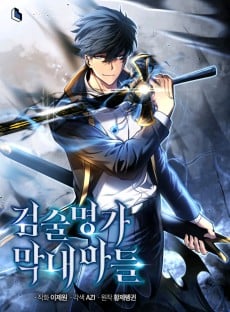 MANGA ActionThe Swordmaster's Son
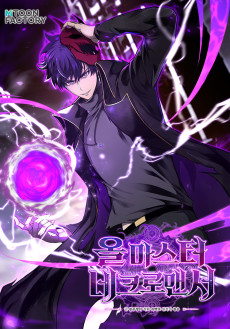 MANGA ActionAll-Master Necromancer
 MANGA ActionThe Infinite Mage

SCORE
- (4.15/5)
MORE INFO
Trending Level 14
Favorited by 1,495 Users