

THE GHOST IN THE SHELL
STATUS
COMPLETE
EPISODES
10
RELEASE
September 8, 2026
LENGTH
24 min
DESCRIPTION
The year is 2029. In near-future Japan, where the world has become highly information-intensive, with a vast corporate network covering the planet, electrons and light pulsing through it. But the nation-state and ethnic groups still survive.
Motoko Kusanagi, a full-body cyborg, leads an elite combat unit, including Batou. While commanding her team, Kusanagi envisions the creation of a specialized task force to preemptively strike against emerging threats. Meanwhile, Daisuke Aramaki of the Ministry of Internal Affairs, who had been planning to establish a similar unit, recruited Kusanagi and her team. Together, they begin operations as Public Security Section 9—an offensive tactical unit known as “Shell Squad.” As they confront complex cybercrimes and international conspiracies, the existence of a mysterious, unidentified hacker known as The “Puppet Master” emerges on the horizon of their investigation.
What fate awaits Kusanagi? And what is the Puppet Master’s true objective? A new era of cyberpunk action begins.
(Source:攻殻機動隊 THE GHOST IN THE SHELL Site)
CAST
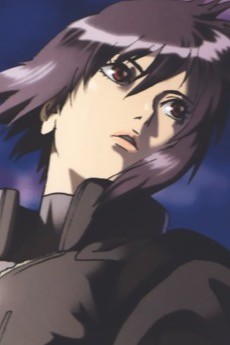
Motoko Kusanagi

Maaya Sakamoto
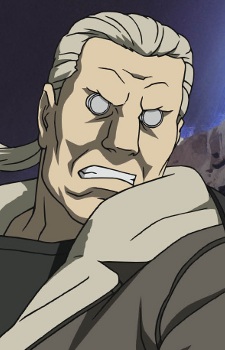
Batou
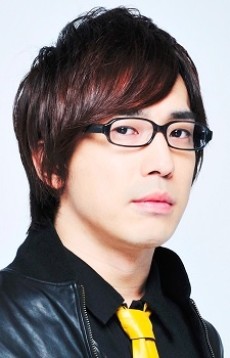
Hiroki Yasumoto

Togusa
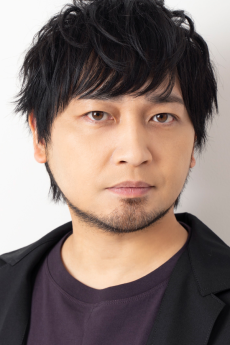
Yuuichi Nakamura

Daisuke Aramaki
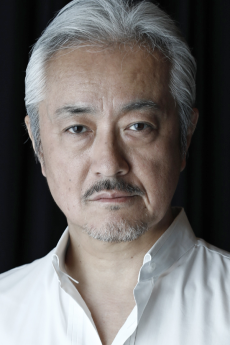
Kazuhiro Yamaji
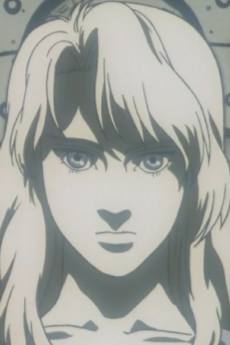
Ningyoutsukai

Kikuko Inoue

Ishikawa

John Eric Bentley

Saitou

Tony Weaver Jr.

Fuchikoma

Lizzie Freeman

Kusanagi no Yuujin (Tanpatsu)

Mai Nakahara

Pazu
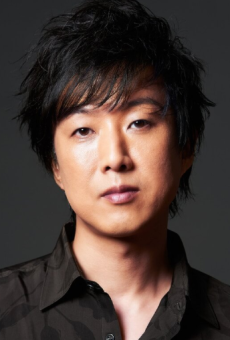
Yuuya Uchida

Operator

Xanthe Huynh

Kusanagi no Yuujin (Chouhatsu)

Houko Kuwashima

Borma
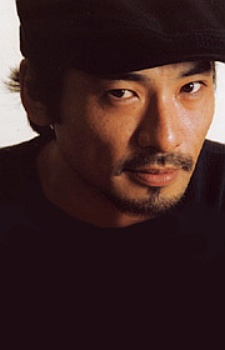
Atsushi Miyauchi

Nakamura Buchou
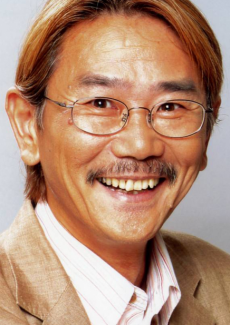
Shigeru Chiba

Naidaijin
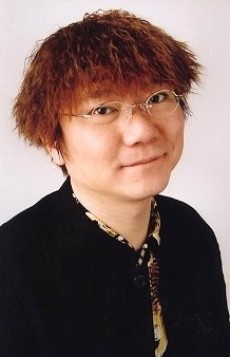
Chafuurin

Keibiin Leader

Tetsu Inada

Itou Jikan
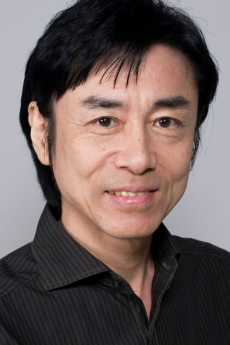
Hiroshi Yanaka

28-ban

Misato Matsuoka

Controller

Takayuki Nakatsukasa

Nakajima

Hinata Tadokoro

Seisou Kyokuin

Youji Ueda

Seisou Kyokuin
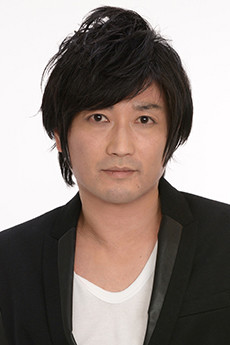
Setsuji Satou

Ningyou
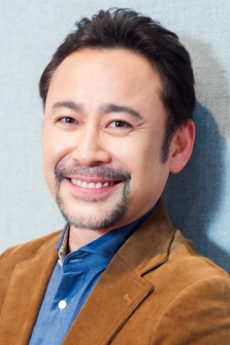
Wataru Takagi

Mares Taisa
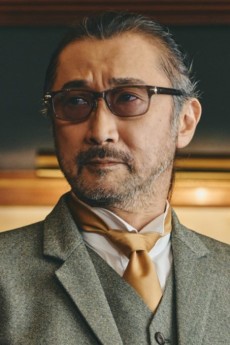
Akio Ootsuka

Hanka Seiki Shachou

Masashi Ebara
Episodes are being prepared. Check back soon.
RELATED TO THE GHOST IN THE SHELL




REVIEWS

Rastrelly
Explosive and insane adaptation of an unadaptable legend. Finally, animated as it should've been.Continue on AniListGhost in the Shell is a "franchise" very dear to my old rusty heart full of wireless hatred. I love to death the Oshii movie (it was actually one of the titles that brought me to watch anime in the first place), I adore Stand Alone Complex, especially 2nd GiG, and I respect some of the things Arise tried to do, even if they failed the landing in many place. And in this house we don't mention SAC_2045.
GitS has always been a weird concoction of different visions existing at the same time. But the one vision that was lacking from the animated space was, well, the original one. Not a single other adaptation did justice to Shirow Masamune's magnificent masterwork of eclectic madness.
Basically, GitS'26 adapts the OG manga almost frame-perfectly, while pulling off having a face of its own, which, as our good pal Joseph'd say, wasn't easy (c). As a result it's basically impossible to talk about this anime separately from its source material. Let's just say that most things not related to anime specifically go to the "wooden" format as well.
I mentioned the word "eclectic", and I even had a reason to do so. Because this is what the OG GitS is. It's quite clear that the story followed what its author was fascinated at the moment. New science city is being built? Put it in! Printing nanocircuits? There it goes! Special forces tactics? Put it in. And add a footnote! Methodology of reloading a gun in combat scenario? Yes, sir! Give the protagonist a girlfriend! Give her two! And a boyfriend! And organize an orgy while at it! And spend that orgy discussing sensor arrays! Because why not!!
The narrative sways from explosive action to almost meditative Asimov-esque monologues. The language of the story is mostly dry and scientific, with some sudden shifts towards contemplation, political satire, slice-of-future-life gags. Whatever goes! Cybernurses clad in cyberlingerie operate nanocompounds and polymer artificial skin infused with nanomachines. Hard-boiled operatives make silly faces and wag middle fingers. Oh, oh, and Vietnam teeth torture! Yummy!
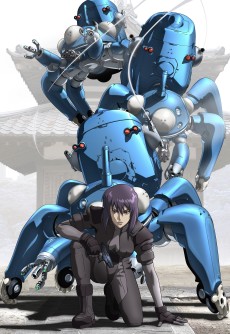
Cute autonomous combat tanks contemplate life, death, killing all humans and natural oil. Grotesque violence shares the same frame with upbeat and energetic comedy.
All this is passed through the lens of completely insane yet surprisingly believable bubbly crew that joins to form Section 9 of Japanese internal security.
Remember Oshii's classic? Contemplative, moody, rusty, oozing introspective melancholy? Yeah, it's all here, in this one. And even more. Just open your looky things and look beyond the goofy exterior. Shirow Masamune gave zero care for what goes after what and how the story must be shaped. It's an insane ride with trash crows, funny faces, hard sci-fi concepts, huge baggage of enthusiastically read and watched cyberpunk and sci-fi classics, and it expects the same enthusiasm from you.
It's a madman's playground, and yet somehow, in the end, it makes perfect sense. There's no reason to talk about the story - it's a convoluted mess in the best meaning possible. And either you, dear reader, are perfectly aware of this story, or trying to explain it will just mislead ye into thinking it's anything but what it is.
In any case, Science Saru did some crazy impressive work taking this artifact of lost technologies of the ancients, and making it into something both modern - as in, look at that camerawork and digital shading! - and unmistakably "retro" at the same time.
The final product is smooth, fast, flashy, and extremely in tune with not-quite-sane energy of the source material. The few scenes that were added to the series beyond the source material look like they were always there, designs look as if they were taken directly from the pages and updated to animated format, and overall it's an absolute treat for any starving cyberpunk/post-cyberpunk enjoyer.
Fly in with the crew with some jazz and electronics, forget the value of human life and do spend some time thinking of which bitrate did the God use when coding the universe.
I honestly wouldn't ever believe that it is at all possible to faithfully put this anomaly of a manga on screen, but somehow them scallywags from Science Saru pulled this off. Now we can only dream of GitS 1.5 and 2 being adapted. And who knows, maybe the follow-up too?..

Keima1987
A fascinating world, great characters, and plenty to think about. A really enjoyable season that left me wanting more.Continue on AniListSpoiler warning: I’ve tried to keep spoilers to a minimum, but read at your own risk.
#__1. Introduction & Core Premise__ --- I went into *Ghost in the Shell* completely blind, knowing basically nothing about the franchise. The first few episodes were definitely confusing, filled with concepts, characters, and events that I didn't fully understand as I spent the beginning trying to figure out what was going on. However, that mystery is part of what kept me watching. My curiosity about this world pushed me forward, and as things began to make sense, I grew comfortable with its ideas surrounding cyberbrains, artificial bodies, consciousness, and what truly makes someone human. I loved that the series doesn't just use these concepts as decorative worldbuilding, but genuinely forces you to sit and think about them. --- # 2. Characters & Dynamics --- Batou ended up being my favorite character. I liked him right from the start, but he only grew on me more as the episodes went on. His relationships with Kusanagi and Togusa were a highlight, and his grounded nature balanced out some of the crazier things happening around him. By the end, he was easily the character I was most attached to. Major Kusanagi was harder to read and understand at first, making it tough to parse what was driving her. Yet, that enigma kept me hooked, and over time I became deeply invested in her perspective on the world and her questions about identity. Then there are the Tachikomas (I ended up loving those little guys!). They brought a refreshing, completely different energy every time they appeared, and I honestly wish we had gotten even more of them. --- # 3. Pacing, Narrative & Worldbuilding --- The world itself was one of the biggest pleasant surprises. It feels incredibly detailed and alive, with so much happening in the background that it reads like an actual functioning society rather than a mere backdrop. The interplay of politics, technology, competing organizations, and cybernetics made me constantly crave more lore. That depth was a double-edged sword early on; the show doesn't stop to explain every single detail, leaving moments where I knew *what* was happening but not *why*, forcing me to connect the dots later. The political side could be difficult to follow at times, and as a newcomer, I occasionally felt like I was missing context or that certain ideas moved too fast. I also didn't care much for the fanservice, though it never ruined the experience. Still, having to figure things out on the fly was an engaging journey in its own right. --- # 4. Style, Atmosphere & Presentation --- Visually, the series looks fantastic. The art and character designs fit the tone of the world perfectly. There is immense detail packed into the mechanical elements, cybernetics, distinct bodies, and gritty environments (I often found myself just absorbing the visuals on screen). The animation quality remains solid throughout the season, delivering strong action scenes while devoting incredible care to subtle mechanical details and immersive atmospheric worldbuilding. --- # 5. Climax, Resolution & Final Impact --- The philosophical core of the story lingered with me far more than expected, particularly how it poses questions about consciousness and identity without rushing to give easy answers. The final episode exemplified this perfectly: I expected one thing, was handed something completely different, and loved it. A key scene near the end caught me entirely off guard and became one of my favorite moments of the entire season. Rather than neatly explaining every loose end, the finale left me with lingering questions. While that can sometimes be frustrating, here it simply left me eager for more. I went from being utterly confused in the first few episodes to finishing the season completely hooked. --- # Final Score: 80/100 [████████░░] 
LSSJGaming
Science SARU's back-to-basics take on this legendary series faithfully recreates Masamune Shirow's masterpieceContinue on AniListThe Ghost in the Shell franchise has always been considered among the upper echelon of Japanese anime between the 1995 film and SAC, and now there is another fantastic adaptation that rivals their greatness. Science SARU's back-to-basics take on this legendary series brings the story and characters back to the original manga, faithfully recreating Masamune Shirow's masterpiece in it's entirety.
Instead of sticking to current design trends or trying to modernize the aesthetic too much, Science SARU leaned into the original manga's more cartoony character designs and facial expressions, faithfully recreating the overall look of Masamune Shirow's art style while integrating modern compositing and animation techniques. This not only gives the show its own unique identity compared to other currently airing shows, but especially stands out within the franchise itself since most adaptations tend to update the art style to fit in with their contemporaries or to ground the series more in realism. Something else to take note of is how well integrated the 3DCG elements are, with 3D elements squashing and streching like 2D drawings and being naturally composited into the shots to the point where it can be incredibly difficult to notice that 3D was even used in the first place.
The voice cast (at least in the Japanese version) were fantastic and really great successors to the classic movie cast whom stuck around for the longest time. To my understanding, Akio Otsuka and Koichi Yamadera didn't want to reprise their roles as Batou and Togusa respecitvely after Atsuko Tanaka's passing two years ago, so this led to a full recast and I would say it worked out really well. Maaya Sakamoto reprises her role as Kusanagi from Arise (and as the younger version of the character in other adaptations) and is able to capture the original Motoko's hotheaded nature alongside the more introspective scenes fans of previous adaptations may be familiar with flawlessly. Hiroki Yasumoto was a great successor to portray Batou, perfectly executing the humorous side of Batou that this adaptation brings to the forefront. I honestly think Yasumoto has become my favorite voice for the character which isn't something I was expecting for someone taking over the role of an actor as legendary as Otsuka. From what little I have heard of the English dub, their new cast seems fantastic too, and I might need to check it out to see more Suzie Yeung's performance as Kusanagi.
The story is honestly the point that I can see being the most controversial, but not due to its content, but moreso its tone. While many people in the modern day are used to the cyberpunk genre being all moody and introspective, Science SARU leans into the more humorous and action packed tone of the original manga without any compromises. This is especially jarring for many fans of the franchise since previous adaptations tend to take the source material extremely seriously, laser focusing in on the philosophical themes without much room for comedy. However, I think that Science SARU leaning into the comedy of the original manga lends itself really well to a more long-form adaptation of the franchise as it helps get the viewer on board with some of the crazy elements before dropping major philosophical and moral questions. It has a nice balance that makes the show feel energetic but still having that same depth as the previous adaptations. That depth was always there in the manga, it just got overshadowed by the adaptations. Watching through the 2026 adaptation, you can even see directly what scenes these prior adaptations pulled from by seeing the original context various iconic scenes were made for originally. The story starts off semi-episodic, but sets up a long running plotline pretty early on that covers the entire length of the season. By the latter half the story is pretty interconnected and pretty dense with the amount of philosophical, psychological, and political ideas shared with the viewer. However I do think the pacing can be a bit too fast due to the 10 episode count which can lead to some ideas not having enough time to linger in the mind of the audience. There were a few points where I had to actively pause and rewind the episode to fully pick and understand lines of dialogue with how quickly they move from one beat to another. Even with these flaws, I was gripped to my screen every single second, eager to see how events would transpire.
One of the main flaws I think that this anime has comes down to the script changes from the original source material that end up creating some confusion or removing some nuance. While some changes such as a minor line removal in Super Spartan do make the story are minor in the grand scheme of things, the main issue comes with how the geopolitics from the manga are handled in this adaptation. Unless you are watching the Latin-American Spanish dub, all names of real world countries are swapped. This makes the latter half of the series especially confusing once politics become an important part of the main plot, as that real world context that makes the story easily digestible is ripped away from the viewer when they suddenly have to memorize the names of fictionalized countries, especially when the historical and political context of these nations aren't provided to the viewer. Episode 9, which adapts the majority of Brain Drain is borderline incomprehensible with the name changes and I would argue definitely hurt my enjoyment of the episode since I shouldn't have to go to the manga just to understand what is even happening.
Another element I am somewhat on the fence about with this adaptation is the integration of the author notes into the show itself. In the original manga, Masamune Shirow would write these footnotes in the gutter space between panels that expand on the worldbuilding and lore of the franchise, providing extra context and background details to help make the world of The Ghost in the Shell feel significantly larger. Science SARU decided to retain this element by having the original notes appear on the bottom left of the screen. While it is nice to have all this extra information retained in the anime, it does have some drawbacks. It is significantly harder to read the notes while watching the anime compared to reading the manga due to having to process both the dialogue and reading the notes simultaneously, and only having a limited time to do so. This is the same problem I have with Translator's Notes in fansubs, and while this is an official part of the show, it does have that same issue of being expected to read way too much in such a short period of time. This is also made worse by the fact that Amazon Prime, the official place to watch the show, does not leave these notes subtitled in the subtitle tracks meant to be paired with the Japanese audio. This is likely due to the lack of custom typesetting so there can't be more than one subtitle on screen at any given time, but it does mean that you are actively losing information that is meant to be read. The only way to read these notes is to switch the audio language to the dub which is not really a convenient or reasonable ask. It makes me think that it may have been better off just to not adapt the notes if it was going to cause this many problems.
Overall I would say this is a great adaptation worth watching, although those few stumbles take it down a few points for me. There are some episodes I would say are genuine 10/10 masterpieces such as Robot Rondo and Bye Bye Clay, but the issues in episodes like Phantom Fund and Brain Drain ii severely hold the show back from being borderline perfect. I would heavily recommend watching this show after reading the manga if you can, or at the very least look up which countries were changed in order to better understand the plot of these two episodes before watching. If I were to give the show a grade I would probably give it about a 7.8 or a 7.9/10, but it is probably one of the best 7.8/7.9's you will see in your life.
COMMENTS
0 Comments
SIMILAR ANIMES YOU MAY LIKE
 ONA2022, ActionCyberpunk: Edgerunners
 ANIME2020, ActionAkudama Drive
 ANIME2012, ActionPSYCHO-PASS
 MOVIE2010, ActionMardock Scramble: The First Compression
 OVA1990, ActionCyber City Oedo 808
 OVA1993, ActionBattle Angel Alita
 ANIME2003, ActionTexhnolyze
 OVA1987, ActionBlack Magic M-66


SCORE
- (3.85/5)
TRAILER
MORE INFO
Ended inSeptember 8, 2026
Main Studio Science SARU
Trending Level 4
Favorited by 1,344 Users
Hashtag #攻殻機動隊 #THEGHOSTINTHESHELL