

DIGIMON BEATBREAK
STATUS
COMPLETE
EPISODES
49
RELEASE
September 27, 2026
LENGTH
24 min
DESCRIPTION
GLITCH THE FUTURE.
Tomoro Tenma lives in a world where human thoughts and emotions—known as “e-Pulse”—power AI devices called Sapotama. But when Digimon begin materializing from Sapotama and feeding on e-Pulse, society begins to fracture. After Gekkomon appears from his device, Tomoro joins Glowing Dawn, a secret team investigating rogue Digimon and the dark truth of a system both fueled and corrupted by emotion. What new future will be forged by humans and Digimon?
(Source: Crunchyroll, DIGIMON BEATBREAK Official Site, edited)
CAST

Gekkomon

Megumi Han

Kyou Sawashiro

Youhei Azakami

Reina Sakuya

Tomoyo Kurosawa

Tomorou Tenma

Miyu Irino

Chiropmon

Misaki Kuno

Makoto Kuonji

Arisa Sekine

Murasamemon

Daiki Hamano

Pristimon

Mutsumi Tamura

Vamdemon

Hiroyuki Yoshino

Mummymon

Takumi Yamazaki

Hotaruko Kanuma

Sakura Kawaguchi

Granit

Marina Inoue

Honoka Sakai

Rie Kugimiya

Raito Souda

Toshiyuki Toyonaga

Pandamon
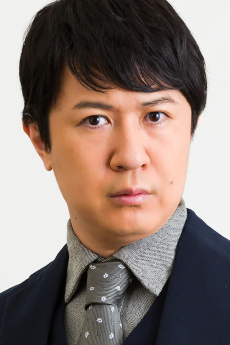
Tomokazu Sugita

Rose Woodville

Ryouko Shiraishi

Hitomi Shinomiya

Minami Tsuda

Ludomon

Yuuko Sanpei

Klay Arslan

Satoshi Mikami

Elizamon

Naomi Oozora

Genjou Kanada
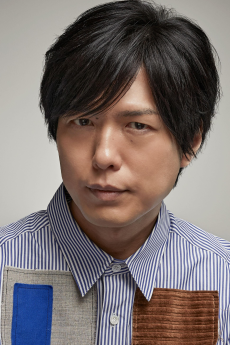
Hiroshi Kamiya

Monodramon

Wataru Hatano

Syakomon

Misaki Watada

Gigasmon

Ken Uo

Marinechimairamon

Takako Honda
Episodes are being prepared. Check back soon.
RELATED TO DIGIMON BEATBREAK
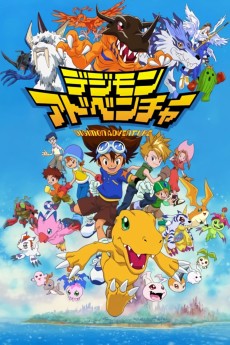

REVIEWS

Hameru
A darker take on the Digimon adventures many of us grew up with and loved.Continue on AniList Unlike Pokémon, which has remained pretty tame throughout the years and still aims to sell its products to a younger audience because it knows the people who grew up with it will keep consuming whatever they release regardless of their age, Digimon has had to adapt itself to its audience and grow up with it. I’m writing this review as someone who grew up loving Digimon when I was a child. Just as I wished I could go to Hogwarts, hoped Pokémon were real, or dreamed that I could somehow become a magical girl, I also dreamed of becoming a Chosen Child and receiving my own partner to go on adventures in the Digital World. __This will be a mostly spoiler-free review!__
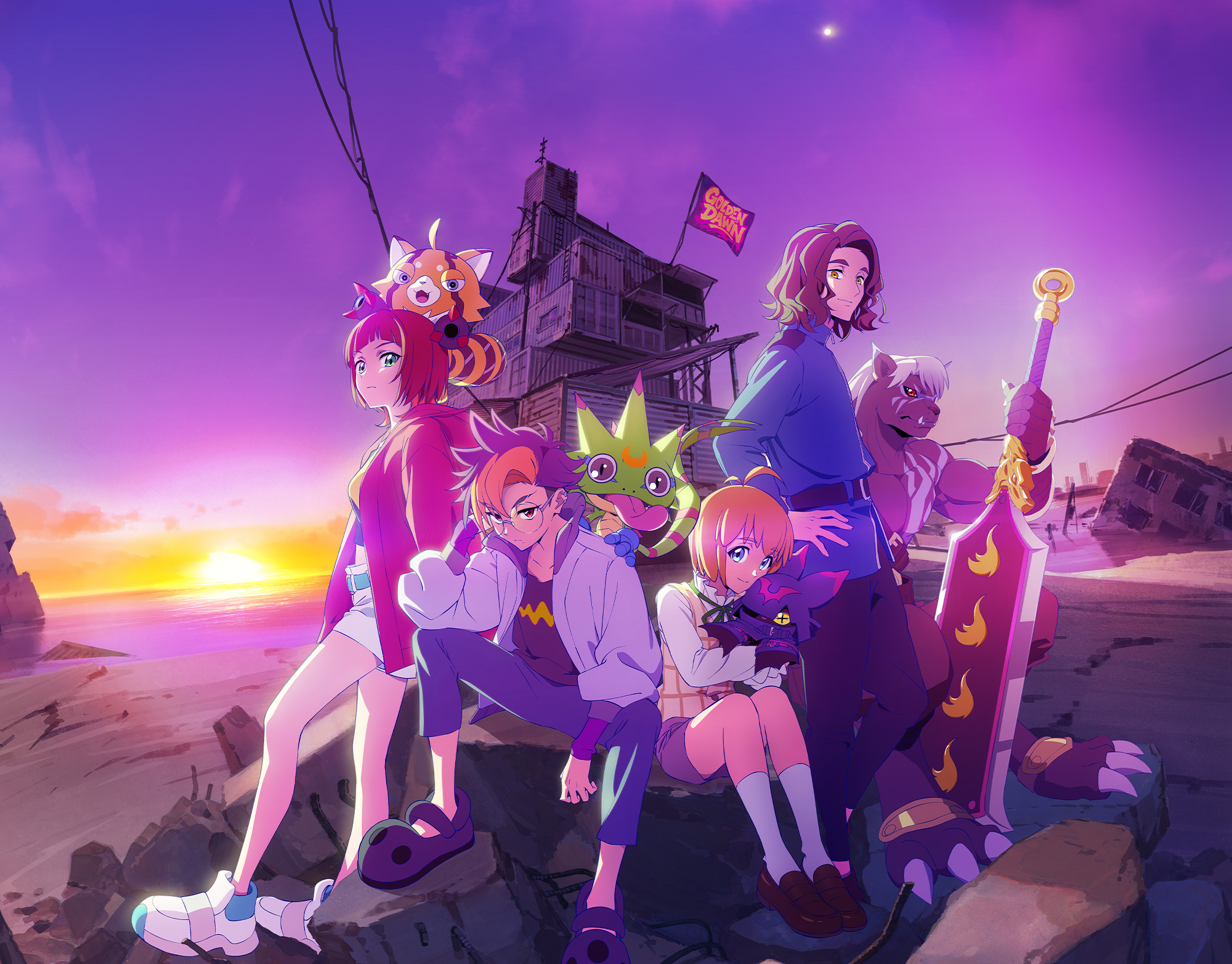
Digimon has always been known for having much darker and more drama-infused storytelling compared to other children’s shows, tackling themes such as grief, loss, abuse, and neglect. That’s why it was often seen as Pokémon’s edgy cousin haha. DIGIMON BEATBREAK embraces that spirit and mixes it up with a new cast of characters who are much more mature-looking than what we’re accustomed to. An ensemble cast of kids looking for a place to belong and who are fortunate enough to meet each other and become a family in Glowing Dawn. They are:
# __Tomorou Tenma & Gekkomon__
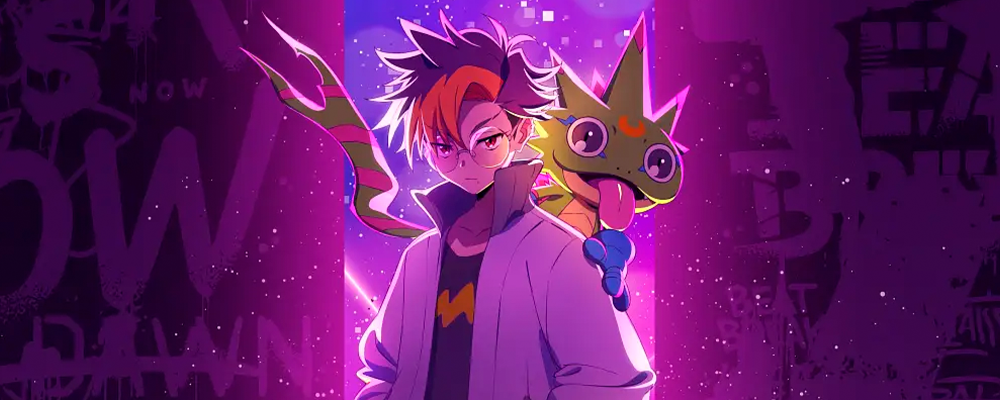 Tomorou is a really interesting lead who initially seems to struggle with the typical rebellious teenage issues that any 15-year-old with a complicated family background might have. That’s why, despite his early attitude, seeing him warm up to Gekkomon and everyone else at Glowing Dawn is such a treat. His growth and the things he goes through this season mold him into an entirely new person who is able to love those around him and be more open about his own feelings and traumas.
And then we have Gekkomon! Probably one of the cutest and most colorful designs I’ve seen in a main Digimon in a while. However, just like Agumon or Guilmon, he’s a glutton who at first impression can only think with his stomach haha. I like how Gekkomon also grows and matures while learning to support Tomorou through his struggles and overcome them together.
# __Reina Sakuya & Pristimon__
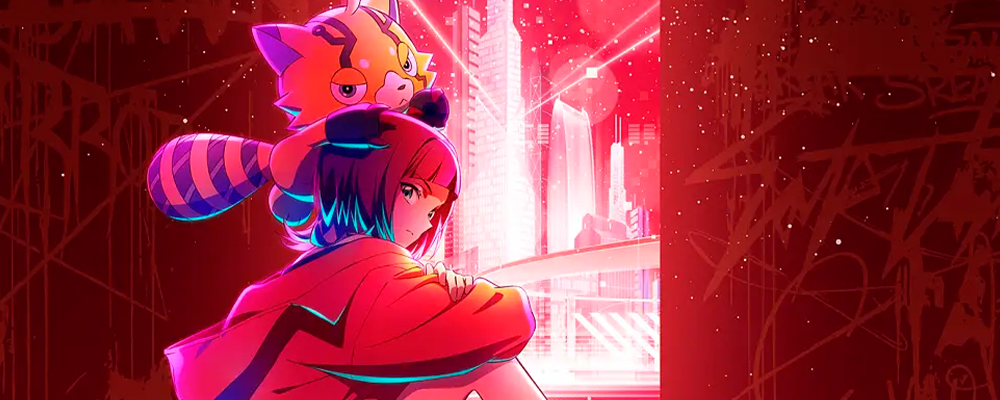 Early Reina reminded me a lot of Ruki from Digimon Tamers, but as we get to know her we realize that her attitude is related to her own circumstances and how overprotective she is of the place she calls home. I’m happy to see the way her personal arc revolves around challenging herself and learning to stop comparing her own abilities with those of others. It’s a lesson in self-love and self-improvement that I think fits her really well.
And a female Digimon that’s not oversexualized??! I loved Pristimon. I sadly wasn’t a fan of her Mega form, but her Ultimate digievolution was really fun despite the silly name haha. She was the perfect partner for Reina because of how understanding and patient she was. They balanced each other out perfectly.
# __Makoto Kuonji & Chiropmon__
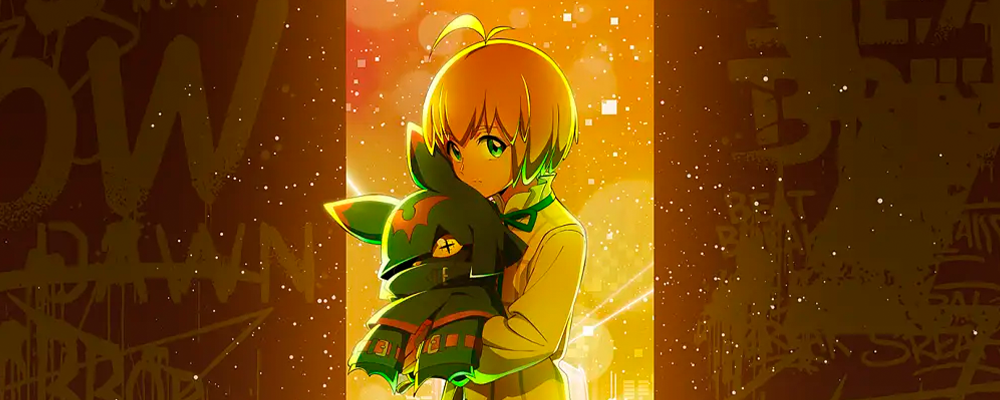 I didn’t realize how young Makoto was until I checked his profile card, for some reason I had just assumed he was short lmao. I guess I though that because despite being the youngest, he is the most mature one out of these three. The mandatory nerdy kid with a surprisingly interesting past, I’m glad that he had the chance to face his own past and own it.
Chiropmon was an incredibly important asset for the team, helping with everything related to analysis and providing incredibly useful supportive skills. His evolution tree was unexpectedly varied. Just like Pristimon, I preferred his Ultimate form over the Mega one, sadly.
# __Kyou Sawashiro & Cougarmon__
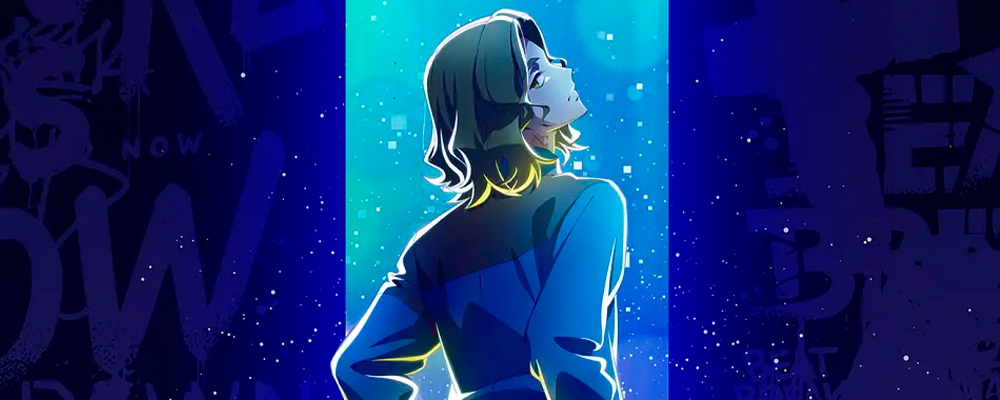 The role model responsible for giving everyone in Glowing Dawn a home. A character with a lot of depth and some of the darkest and saddest background stories I’ve seen in the franchise. On many occasions, he was the main plot trigger and point of connection between the team and new enemies related to his own past. He evolved tremendously as he learned to embrace his own demons and face them together with his new family.
Cougarmon was an amazing example of courage and loyalty. He backed up Kyou as his partner through all the good and bad times, with the two trusting each other blindly and understandably. Murasamemon and his Mega form both had incredibly cool designs. I’m just sad he had to suffer from a popular curse the franchise is known for lmao.
---
When it comes to the actual plot, I think the story was pretty solid. It was divided into several arcs with episodic adventures that allowed us to slowly get familiarized with the entire cast and the kind of relationship humans and Digimon have in this world. The concept of Digimon being considered “bugs” by society and having to choose to either become a hunter or be hunted in order to survive was an interesting take. I also really loved the idea of e-Pulse being the way humans could power up their Digimon through their thoughts and emotions. It was a fun concept that also tied nicely into the way the partners and their humans interacted in the most crucial moments.
This season also played around quite a bit with concepts of discrimination and marginalization, not only related to social classes, but also to the kinds of abilities some Digimon had. Particularly interesting was the way some of them were used as weapons by organizations, with people trying to use them for their own agendas and essentially treating them as slaves. I think the plot twist by the end of it all was a great way to show how human greed is destined to fail, especially when it comes at the cost of someone else’s individuality and freedom.
I’m also really happy that, unlike other seasons in which everything was solved by using a digievolution to power through whatever new enemy the cast faced, BEATBREAK took its sweet time to properly explore its cast and use these transformations as important plot points rather than cheap power-ups. This made most of these moments much more meaningful, and it gave us time to get attached to each of these new forms we met throughout their journey.
All in all, I’d say DIGIMON BEATBREAK is a great way for people who grew up with the franchise to relive some of the moments that might have made them fall in love with the franchise in the first place. It works as a spiritual successor while also allowing them to experience those same feelings through themes that are contemporary to the kind of world we live in nowadays.

Juliko25
Beatbreak is the much needed balm the Digimon franchise needed after years of mediocre offerings. Break that beat!Continue on AniListDigimon really hasn't had it easy as a franchise before 2022. Between the Tri movies, Adventure 2020, and Ghost Game being unmitigated disasters, promised video games being stuck in development hell, and Bandai's lack of interest in the franchise, fans like myself feared that Digimon would be neglected and left to flounder. Luckily, from 2022 onward, things started to change. A webcomic called Digimon Liberator put eyes back on the franchise and renewed interest in the card game. The aforementioned video games, Digimon Survive and Digimon Story Time Stranger were finally completed and released, with the latter being such a massive critical and financial success that it pretty much made Bandai realize that Digimon was worth investing in as a franchise again. There's a new mobile game, Digimon Alysion, due out sometime, though no news of its release date have been revealed as of yet. But fans like myself really wanted Digimon to get a good new anime again, since previous attempts fell completely flat on their face, so naturally, we were pretty guarded when Digimon Beatbreak was announced. I dropped Ghost Game at episode 33 because it became clear to me that the series had no interest in exploring its characters or its overarching plot, and that decision wound up being validated when I heard that the show's ending was a complete and utter clusterfuck. Not gonna lie, the whole time I was waiting for Beatbreak to air, I was thinking "Please let this be good! Please please pleeeease let Beatbreak actually be good for once! Digimon needs a new good anime again!" Thankfully, Beatbreak wound up being exactly that. I was hooked from episode 1 and didn't look back. Yes, THIS is what Digimon fans wanted after so many years of subpar offerings, and while it's not a perfect series, it delivered in the places it mattered!
Far into the future, an energy called "e-pulse" is generated from human thoughts and emotions, used to power specialized AI smart devices called Sapotamas. Sapotamas are so ingrained in society that humans are expected to use them all throughout their lives. 15-year-old Tomoro Tenma couldn't care less and has his own problems to deal with, between being stuck in poverty and his e-pulse glitching any Sapotama he touches other than his own. However, one day, a strange creature called a Digimon pops out from his Sapotama, called Gekkomon. Not long after, Tomoro is pursued by more creatures called Digimon. In the ensuing chaos, his brother Asuka gets attacked by a Digimon and has his e-pulse drained, which causes him to become frozen. From then on, Tomoro's life is turned completely upside down, as not only are Digimon considered problematic glitches by the World Union and therefore meant to be deleted regardless of whether they're dangerous or not, Tomoro is considered a criminal by association. The only way he can escape being pursued by the World Union is by becoming a Cleaner, a World Union backed bounty hunter that's tasked with pursuing Digimon that commit crimes. With nowhere to go, Tomoro finds himself joining Glowing Dawn, a down-on-their-luck Cleaner team led by Kyo Sawashiro, who seems to be well-acquainted with his brother. Tomoro is determined to track down the Digimon that froze his brother...if his own angst and personal demons don't do him in first.
I want to start off by talking about what I feel Beatbreak's biggest strength is: Its setting and worldbuilding. Being a sort of futuristic cyberpunk series, Beatbreak leans HARD into how AI technology that's completely ingrained in society informs its entire world and the people living in it, exploring both the good and the bad aspects of it. Practically everything in Beatbreak revolves around its setting: How Sapotamas birth Digimon, the history behind how Sapotamas came to be, the government wanting to cover up the existence of Digimon, how the bounty hunter system works, and how capitalism and classism are exacerbated with society pushing the usage of AI. Kinda like real life, currently! While I admit it's been a while since I've seen some seasons, especially Tamers and Frontier, I feel that out of all the Digimon series I've seen, Beatbreak manages to make the best use of its setting. If anything, the setting is a character in and of itself, and not just as a timely and very much needed social commentary on our current society and where it's going. The characters have to navigate the world they live in, and how they approach every problem is still informed by the society they have to live under, which makes its themes and messaging actually feel like they have weight and gravitas, especially for something aimed at middle school kids or young teenagers. Beatbreak spares absolutely no effort in utilizing its setting as much as humanly possible, and I think the writers hit a home run on this front.
What makes Beatbreak even better compared to Adventure 2020 and Ghost Game is that unlike both those series, the writers had the sense to plan the series out, ensuring that the plot could effectively fit in a 49 episode run time, and make as much use of the time they have as possible. Beatbreak is divided into six arcs total, with the first arc setting up the characters and the show's foundation, the second arc expanding the scope of the plot, the third one being a laid-back breather, the fourth arc sets up plot points that the last two arcs make full use of, and the final two have everything come together. Because the creators actually bothered to plan the series out and figure out how to approach everything, the series never feels like it's dragging on. Every episode is chock full of cross-references to either past or future events, there's quite a bit of foreshadowing, and most of the time you won't recognize something as foreshadowing until after what they hinted at has already happened. Granted, the series doesn't quite manage to answer all of its underlying questions, especially near the end, and even raises further questions, but I found that they didn't hurt my enjoyment of the show all that much. When you consider that Adventure 2020 put way too much focus on action and sakuga at the expense of all else, and Ghost Game being episodic to the point that it completely ignored any plot points it set up, not to mention its absolute garbage fire of an ending, I'm just happy Beatbreak learned from their mistakes.
Another aspect Beatbreak improved upon compared to Adventure 2020 and Ghost Game is actually having a well-developed cast of characters for once. That said, I am rather mixed on this because Beatbreak's approach to its characters is rather uneven. Some characters get a lot of focus and are wonderfully developed (Tomoro, Kyo, Makoto, Klay, Granit, Hotaruko, Haruomi), while others either don't get as much focus, have parts of their backgrounds unexplored, or are woefully underutilized (Any Five Star who's not Klay, and any girl who's not Maki, Hotaruko, or Miharu). It's hard to maintain a good balance when you're writing for a large ensemble cast, so it stands to reason that some characters won't get to do as much as you want them to, but there are several characters you could have just cut from the story and you'd lose nothing, with Rose's two flunkies being the biggest victims of this. Seriously, they never got to be anything other than living props that never grew beyond their base archetype. Kaito in particular is made out to be super important, then he just disappears for 80% of the series and doesn't become relevant again until the final arc, not to mention he's just another shounen character whose only personality trait is that he wants to defeat Kyo and be stronger than him just because. That said, for as flawed and uneven as Beatbreak's character writing is, this is still an improvement over Adventure 2020 and Ghost Game, which barely bothered to truly develop their characters at all.
I still enjoyed following everyone's adventures and was invested in them throughout the series' run, even if I wish more had been done with them. Not to mention it was pretty ballsy of the series to have Tomoro be an unapologetically flawed, angsty teenager who is not happy about his situation and actually has to grow, change, and own up to his own issues, have his views be challenged, and not have it be a clean and pretty process. It's especially notable because these days, it seems like a lot of more casual anime fans want the shows they watch to have instantly perfect, likeable characters who never face any challenges, overcome them easily, or are never challenged on their views and flaws. If characters in a story were perfect and had everything handed to them on a silver platter, there would be no stakes or conflict, therefore no reasons to care about them or invest in them. Even the early Digimon seasons like Adventure and Tamers understood this. Mad respect to Beatbreak for trying to go back to that ethos, even if it didn't manage to stick the landing for half the cast.
Beatbreak's animation is also a noted improvement from Ghost Game. I won't lie, Ghost Game's animation most of the time looked like it was made on a literal budget of shoestring and pocket lint, between flat backgrounds, muted colors, and often coming off very stiff, the evolution sequences notwithstanding. Beatbreak's is much more colorful and dynamic, but also puts just as much care into the backgrounds and setpieces so the world actually feels like it's alive. Not to mention some absolutely killer Digimon designs for the new Digimon introduced just for this series. Chiropmon best boy. It does use some CGI here and there, but other than a few conspicuous instances, I never felt like it was too intrusive. I was often surprised by how consistent Beatbreak's animation was throughout its 49 episode run, and any dips in quality were few in number from what I noticed. The soundtrack is also an absolute bop, featuring a variety of versatile pieces fitting the show's cyberpunk leanings. I certainly remember it more than Ghost Game's soundtrack. Not gonna lie, the only things I remember about Ghost Game's soundtrack are First Rider being a great song and Faction being absolutely unbearable for my ears. Sorry to fans who like that song, I just couldn't stand it.
On its own, Digimon Beatbreak is a decent series that manages to be an effective commentary on our current society that's still accessible to children, even if it struggles with a lot of balancing and narrative issues, especially in the final stretch...though that's not much different from the original Digimon Adventure series, now is it? It'd be easy to dismiss Beatbreak as just another generic shounen children's show on its own, but when you have the context of coming after Adventure 2020 and Ghost Game, two Digimon seasons that are riddled with tons of issues, one of which made an absolute mockery of the original Adventure season, Beatbreak is a welcome return to form, and a much needed shot in the arm for the franchise. Watching this series week after week made me feel like a kid again watching Digimon on Fox Kids and Jetix on TV whenever I could. I know for a fact that I would have devoured this season if it had come out when I was younger, but I'm happy I got to experience it as an adult. Verdict: Beatbreak is great, ya know!
COMMENTS
0 Comments
SIMILAR ANIMES YOU MAY LIKE
 ANIME2025, ActionSI-VIS: The Sound of Heroes
 ANIME2023, ActionPokémon Horizons: The Series
 ANIME1999, ActionMonster Rancher
 SPECIAL2013, ActionPokémon Origins
 ONA2021, ActionPokémon Evolutions
 ONA2016, ActionPokémon Generations
 ANIME2025, ActionMy Hero Academia: Vigilantes
 ANIME2022, MysteryTokyo 24th Ward
 ANIME2016, ActionDimension W
 ANIME2023, ActionBEYBLADE X
 ANIME2018, ComedyYoukai Watch: Shadow Side
 ANIME2014, ComedyYo-kai Watch
SCORE
- (3.55/5)
TRAILER
MORE INFO
Ended inSeptember 27, 2026
Main Studio Toei Animation
Trending Level 1
Favorited by 340 Users
Hashtag #ビートブレイク #BEATBREAK