
JAADUGAR: A WITCH IN MONGOLIA
STATUS
COMPLETE
EPISODES
12
RELEASE
September 12, 2026
LENGTH
23 min
DESCRIPTION
After losing her mother and her homeland, Sitara’s despair transforms into determination with the power of knowledge. New possibilities unfold when a family of scholars takes her in, deepening her education. Meanwhile, Genghis Khan’s Mongol Empire conquers nation after nation, nearing Sitara’s new home. After the Fourth Prince of the empire takes her captive, a flame of revenge is ignited.
(Source: Crunchyroll)
CAST

Sitara

Akira Sekine

Töregene

Ami Koshimizu

Boraqchin

Kujira

Sorghaghtani Beki

Misaki Kuno

Tolui

Ryouta Suzuki

Muhammad

Jun Saito

Shira

Miyu Irino

Ögedei
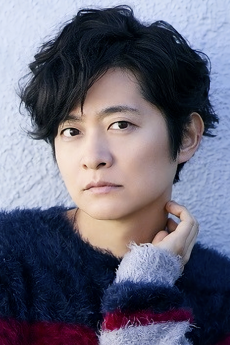
Hiro Shimono

Fatima

Houko Kuwashima

Möge

Ayaka Asai

Chagatai
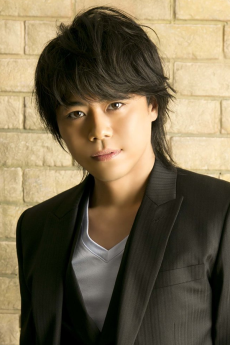
Daisuke Namikawa

Khulan

Inori Minase

Zumurrud

Farahnaz Nikray

Anis

Mariya Ise

Kirgistani

Mayumi Shintani

Chinqai

Youji Ueda

Güyük
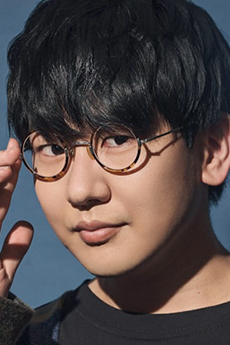
Natsuki Hanae

Jochi

Kenji Nojima

Dayir

Akira Ishida

Oji

Tsuguo Mogami

Ahmad

Binbin Takaoka

Kamal al-Din

Hiroki Maeda

Temüge
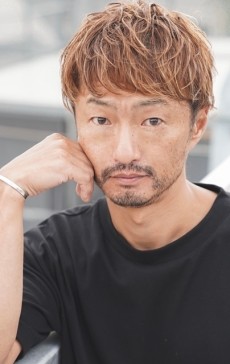
Shinji Kawada

Kublai
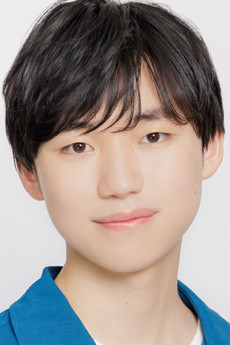
Hiiro Ishibashi

Qultuqan

Shouya Chiba
Episodes are being prepared. Check back soon.
RELATED TO JAADUGAR: A WITCH IN MONGOLIA
 MANGA AdventureA Witch's Life in Mongol
REVIEWS

Zeldslova19
All on this earth belongs to... Knowledge: Culture as power in an endless duress through remote and fascinating oasis.Continue on AniList(ENG REVIEW) (An AMV-music box to listen to while reading this review) "Centuries ago, scholars used geometry to determine the planet's dimensions for the first time.
In the same way, might it be possible to use geometry to measure the dimensions of the destiny we hold in our hands?
This is the story of a witch who shaped the fate of a vast continent."To Westerners, __Iran__ is primarily known for the succession of wars and uprisings that have plagued the region for decades. However, if we consider its original name, __Persia__, it's far more likely that images of an ancient culture and tales from _One Thousand and One Nights_ come to mind. It is precisely in that ancient Persia, __a cradle of scholars and poets__, and depicted during its __cultural golden age__, that _"__Tenmaku no Jaadugar – A Witch in Mongolia__"_ unfolds. And yet, not quite the case... 


Written and illustrated by __[Tomato Soup](https://anilist.co/staff/138261/Tomato-Soup)__, the series was first published on the _Souffle_ website and later in Akita Shoten’s _Mystery Bonita_ magazine. Currently comprising five volumes (plus a sixth one recently released), the series has just resumed publication following the author's maternity leave and won the award for _Best Manga for Female Readers_ at the 2023 __Kono Manga ga Sugoi!__ awards and then, this year, the 54th edition of the __Japan Cartoonists Association Awards__, a prestigious prize presented annually since 1972 to those who have distinguished themselves among published manga titles. 


All Jaadugar released volumes: the manga is currently ongoing (while the last one, "Motto! Tenmaku no Jaadugar", is a guidebook) The success of "_Jaadugar_" in its home country was such that, in addition to receiving various accolades, it spawned a __promising animated adaptation__. Premiering in early July, it was produced by Studio __[Science SARU](https://anilist.co/studio/6145/Science-SARU)__ (_Dandadan, Eizouken!, Devilman Crybaby_), the project featured __[Naoko Yamada](https://anilist.co/staff/102498/Naoko-Yamada)__ (_Heike Monogatari, Liz and the Blue Bird, A Silent Voice_) as chief director and __[Abel Góngora](https://anilist.co/staff/154060/Abel-Gongora)__ (_Star Wars: Visions, Scott Pilgrim Takes Off, Dandadan_) as director. 
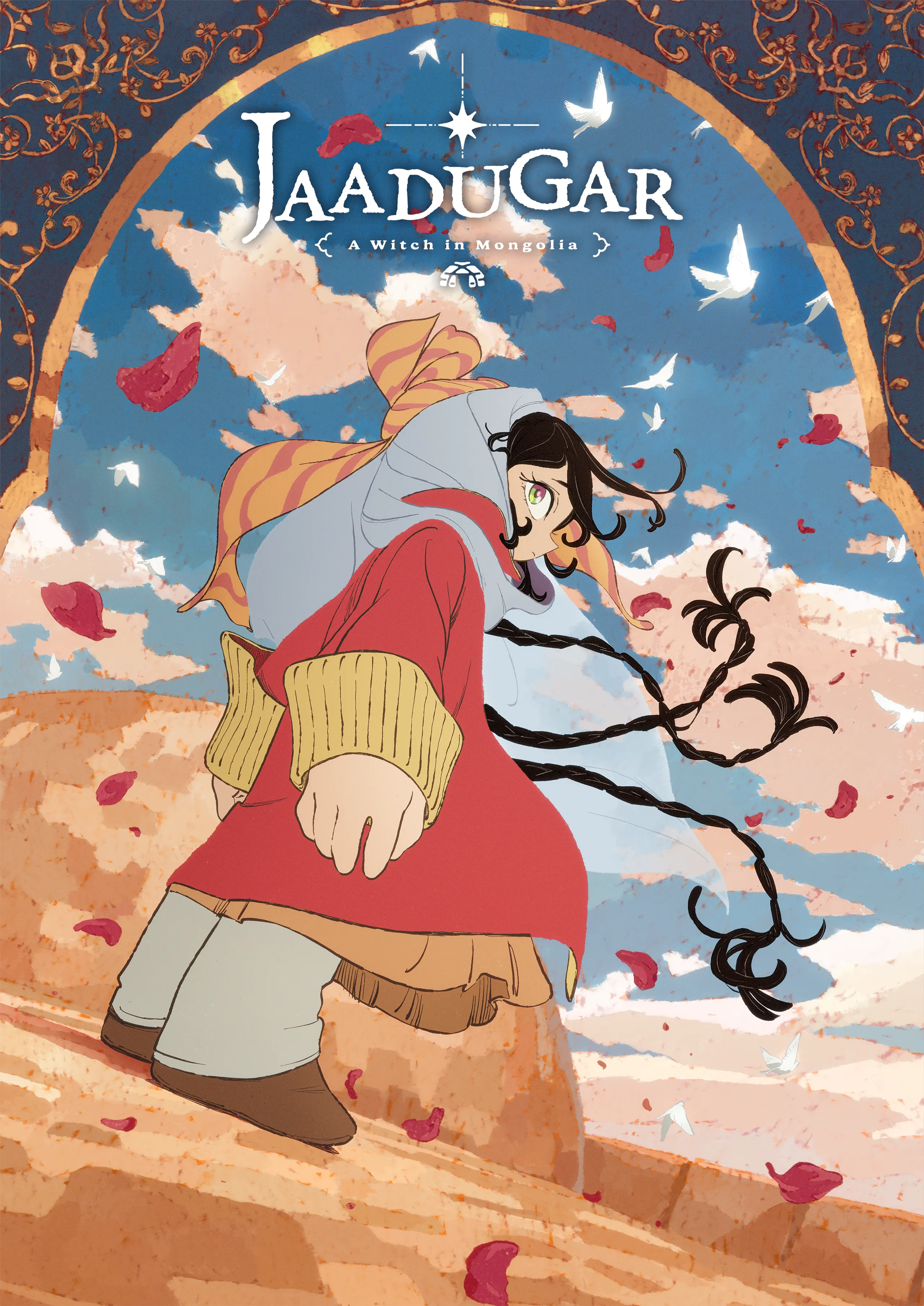

Jaadugar: four main KV of the series (+ a GIF bonus from Jaadugar official website)
The MAKING OF the animated series From the very first images, the anime sparks curiosity only for a visual style that __breaks away from standard Japanese conventions__, much like the manga on which it is based. And from the very first episodes, it promises a timeless tale: __a human, exotic story__ that explores the __history and culture of a faraway century__, in a setting and era __not typically seen in anime__. "_Jaadugar_" is a highly anticipated title, not only because it adapts a beloved and acclaimed manga but also due to the creative team behind it. As I said before, overseeing the direction is __Naoko Yamada__, a figure deeply admired by Japanese animation enthusiasts: she is responsible for the delicate touch found in "_Liz and the Blue Bird_" and "_A Silent Voice_", as well as the lightheartedness of "_K-On!!_" and the intimate family portrayals in "_The Heike Story_". Following this project, Yamada reunites with __Science SARU__ for another animated series (again set against a historical backdrop) where one can expect the same keen attention to small gestures, personal aspirations, and the extraordinary nature of the protagonists' everyday lives: ordinary men and women, despite their historical significance. 


Some Jaadugar characters sheets by Kenichi Yoshida Some anime stand out at first glance as extraordinary works. Right from the initial promotional images, the character design by [__Kenichi Yoshida__](https://anilist.co/staff/103498/Kenichi-Yoshida), a __Studio Ghibli__ alumnus who previously worked on acclaimed titles like "_Eureka Seven_", signals something different: __simple lines, stylized bodies, and faces that evoke a nostalgic aesthetic rather than adhering to contemporary animation standards__. This stylistic choice might initially bewilder or even put off viewers expecting the __highly polished anatomy typical of modern anime__, yet it __proves perfectly in tune with the spirit of the original manga by Tomato Soup__. Above all, it serves a __storytelling style__ that prioritizes the __characters' emotions__ over everything else. It takes only a few episodes to realize just how effectively those seemingly sparse lines communicate: __a glance, a grimace, or a moment of suppressed tension conveys more than many anime manage to achieve with designs ten times more elaborate__. Directing the series is another creator known for an eclectic style that defies typical "Japanese" conventions, as well as a specialist in Flash animation: __Abel Góngora__ ("_Scott Pilgrim Takes Off_", "_Dandadan_"). The direction bears Góngora’s unmistakable signature: frequent use of enclosed spaces captured in wide shots, reduced character detail in favor of background action, subtle perspective shifts, off-center character placement, and a comedic streak that softens dramatic moments. Yet, the camera’s delicacy and meticulous attention to detail clearly reflect Yamada’s supervision; her influence is evident in the pacing, the focus on character, and the understanding that the story is driven by ordinary people rather than heroes. Rounding out the production is a highly effective soundtrack, one that not only entertains but also strikes an emotional chord throughout entire sequences. A success likely attributable, once again, to Naoko Yamada’s creative choices. .
✦:IRAN AND MONGOLIA AS SETTINGS:✦ *Video with automatically generated Eng sub
Jaadugar's teamwork, led by supervising director Naoko Yamada and episode director Abel Góngora, traveled to Mongolia during pre-production, consulted with cultural experts, and cast authentic Mongolian actors for some of the voice roles; these are details that, while not directly visible, can be felt in every scene. The result is an anime that is unafraid to portray slavery, the violence of conquest, patriarchy, and religious differences as facts of the world it depicts, without needing to pander to contemporary audiences for reassurance. The brutality is present but never gratuitous, and it serves to make Sitara and Töregene’s anger understandable.
SINOPSIS 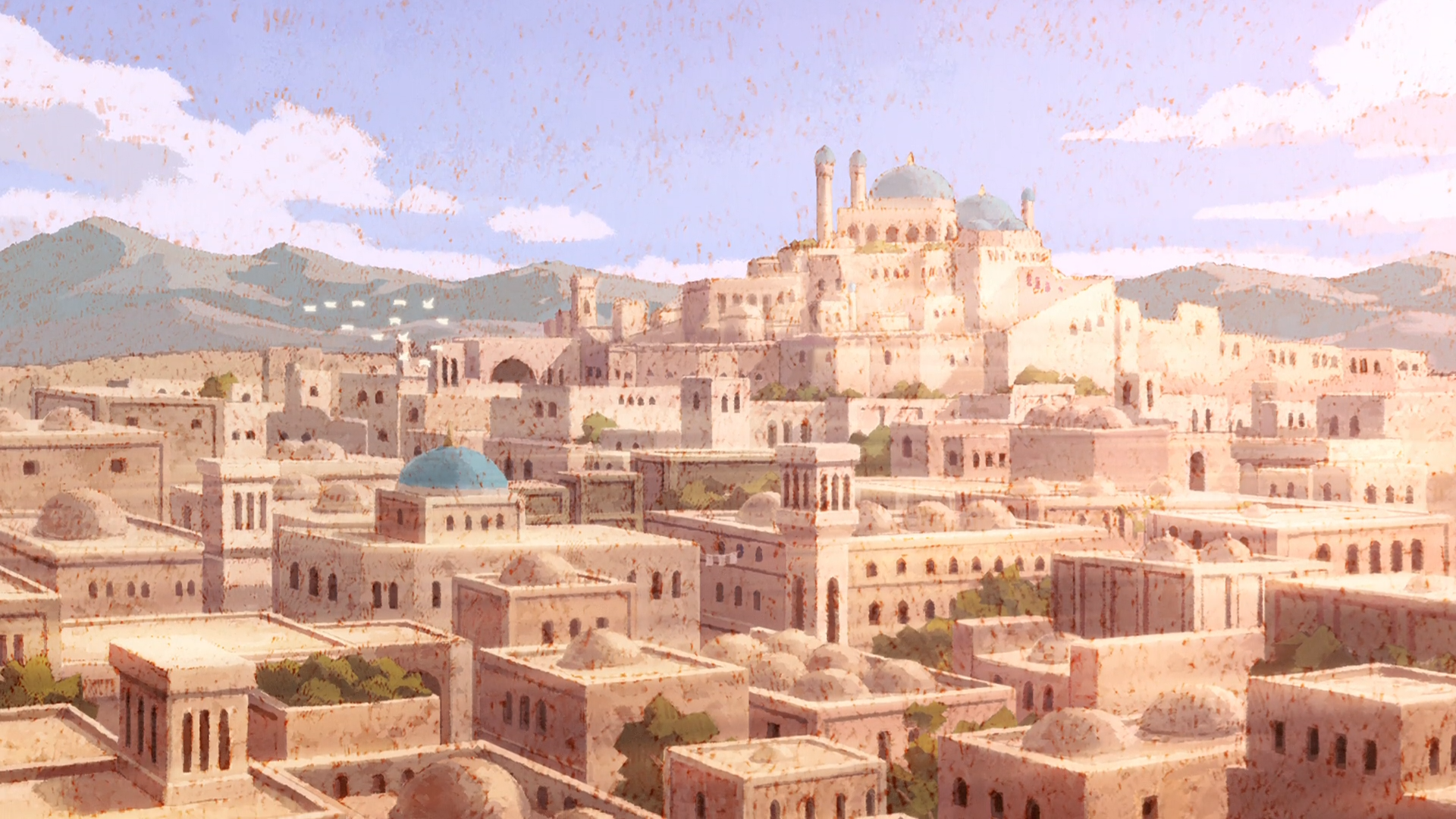
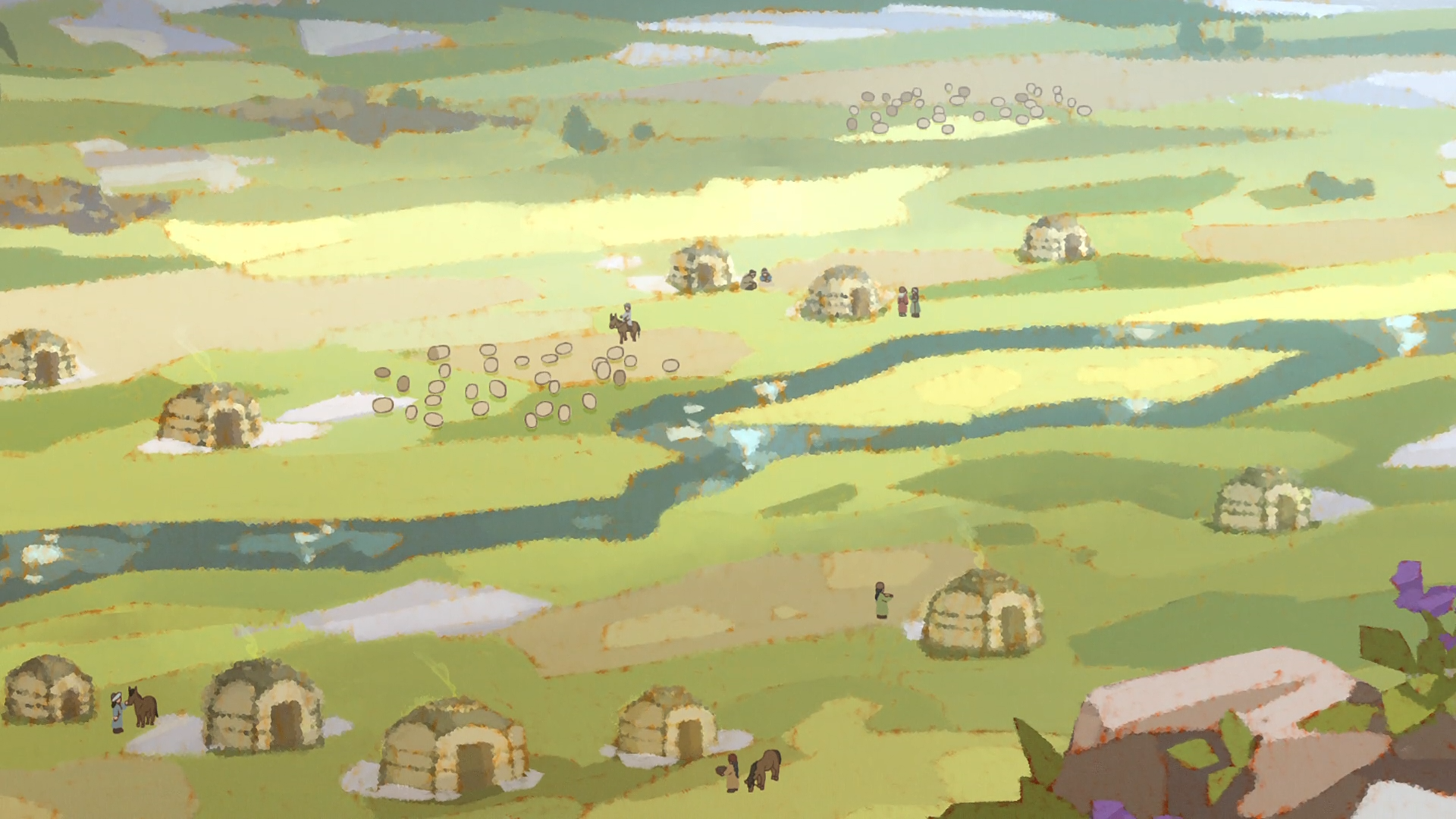
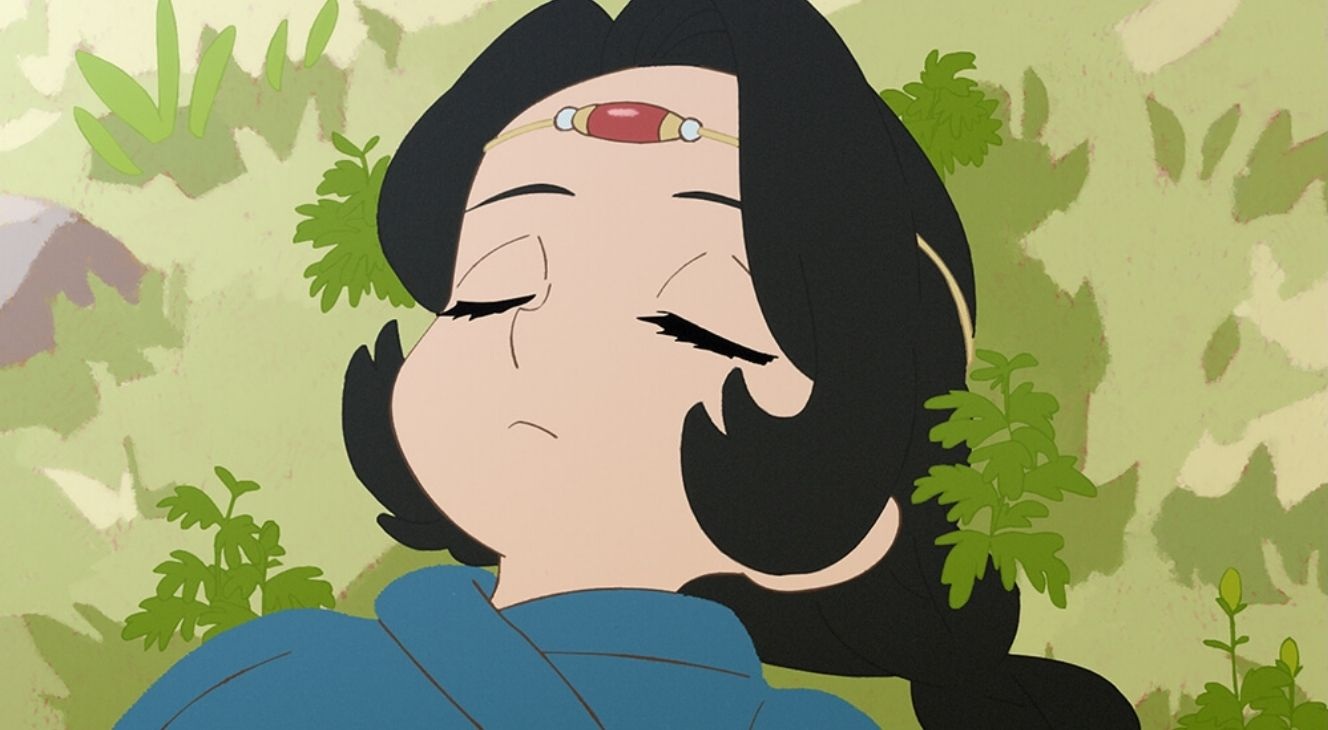
__13th-century__, __Persia__, on the borders of the expanding __Mongol Empire__. A young girl named __[Sitara](https://anilist.co/character/328089/Sitara)__ is sold into slavery to a family of scholars in the city of Tus, at the height of the Islamic Golden Age. Although she initially attempts to escape, she learns the value of __knowledge__ from the family, knowledge that becomes, for her, first a tool for survival and later a source of power. Her bond with __Muhammad__, the son of her mistress __Fatima__, ignites her passion for learning: mathematics, astronomy, and rhetoric. In a society that leaves little room for women (and even less for slaves) Sitara painstakingly builds an __inner freedom__ that no one can take away, even when everything else is torn from her. And that is precisely what happens. Eight years later, when the Mongols under __[Tolui](https://anilist.co/character/380761/Tolui)__, Genghis Khan’s youngest son and commander of the Mongol Empire’s most feared military forces, invade Tus and raze it to the ground, Sitara loses everything in a single blow: her adoptive family, the library she loved, and the city that had become her home. The girl, now a young woman, is abducted and taken to __Mongolia__ as a prisoner of war. Dragged to the Mongol court, she becomes a servant to the wife of Tolui himself but, incensed by the behavior of her captors, she decides to change her name to __Fatima__, in honor of her former mistress, and begins to quietly weave the threads of her revenge. Furthermore, she must reclaim __something of personal value__, something these barbarians unjustly took from her during the invasion of her homeland. Yet to survive in that brutal world, Sitara must __leverage the medical and scientific knowledge__ she amassed from her __homeland__ over her early years of study, knowledge __far ahead of its time__ which becomes her __primary weapon__: so she learns her oppressors' language, studies their customs, identifies their weaknesses, and slowly climbs the court hierarchy. With the patience of someone who knows that "revenge is a dish best served cold and after a long time", now Sitara aspires to become the __"witch"__ who will manipulate the destiny of her enemies. 

"Right now, you don't know where you are... what is happening, or what your future holds [...] But if you study and sharpen your mind... no matter what challenge you face, you will always be able to figure out the right decision to make."
The HISTORICAL CONTEXT & ANALYSIS of the MAIN TOPICS 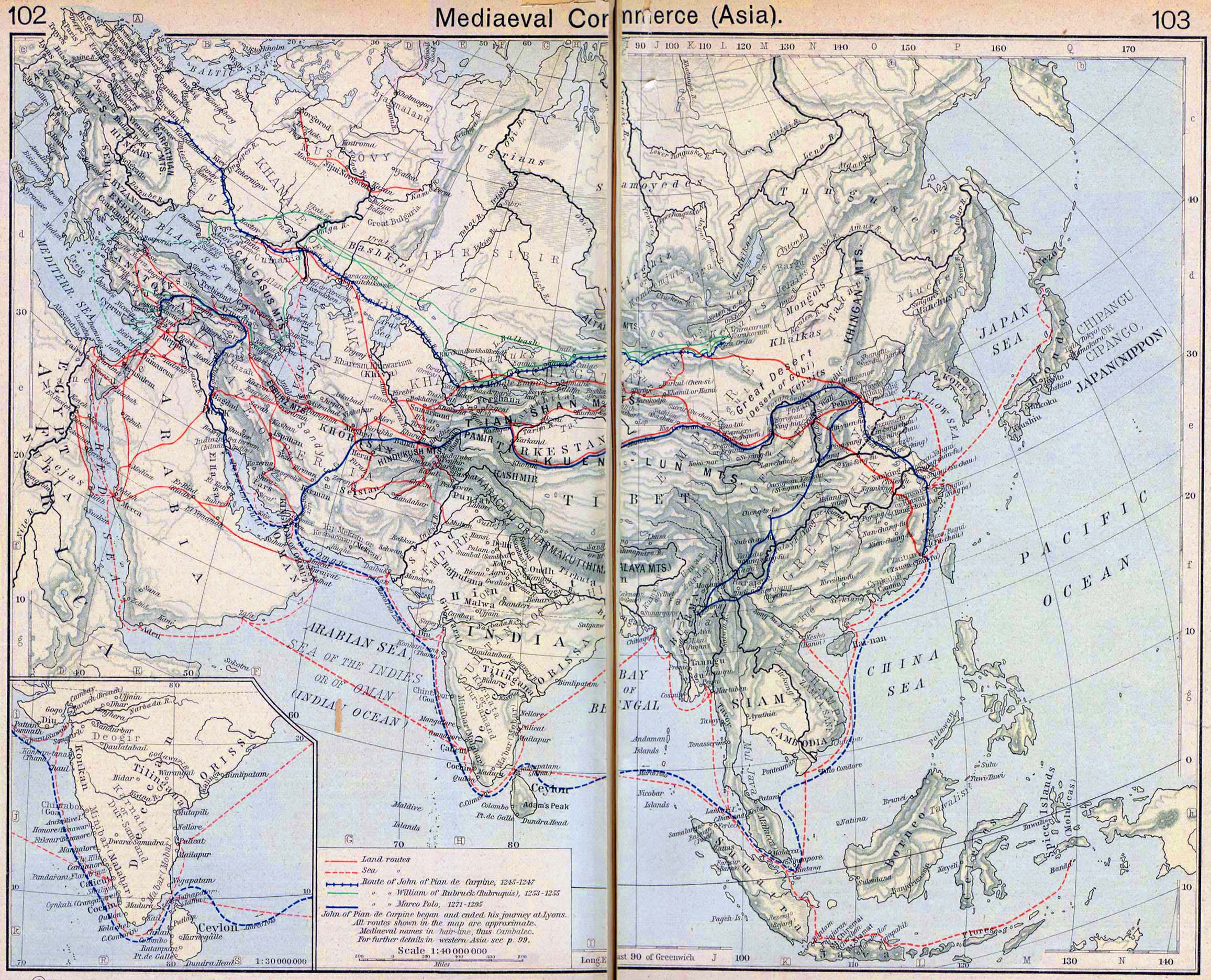
A Historical Map of Mediaeval commerce (Asia) Based on a true story, many traces of which have been lost in the twists and turns of events, the very core of _Jaadugar_'s story can be identified in the paramount importance of __knowledge as a weapon that enables anyone__, even a female slave from very distant times, not only __to survive__ but also __to stand before princes and emperors__ and __turn the situation to their advantage__. And this work of art (both the manga and, I'd say even more so, the Science SARU anime adaptation) stands out precisely because of its __unique qualities__, in terms of both __content__ and __visual style__. Scans from Animedia issues (August/September 2026) The __setting__ is quite unusual: we are in __Persia__ (known as Iran since 1935) during the __13th century__ (specifically, the story begins in __1213 AD__), and by the time the protagonist reaches the Mongol steppes, it's __1224 AD__. A time long past, set in remote and little-known lands. And yet, as often happens, an unusual setting can serve as a catalyst to spark the viewers' curiosity and then enchant them with a story that speaks of __universal and dramatically human values__ such as __love__, __compassion__, __revenge__, and first of all the gift of __knowledge__. __Temaku no Jaadugar series OFFICIAL WEBSITE ---> https://anime-jaadugar.com/en/__ 

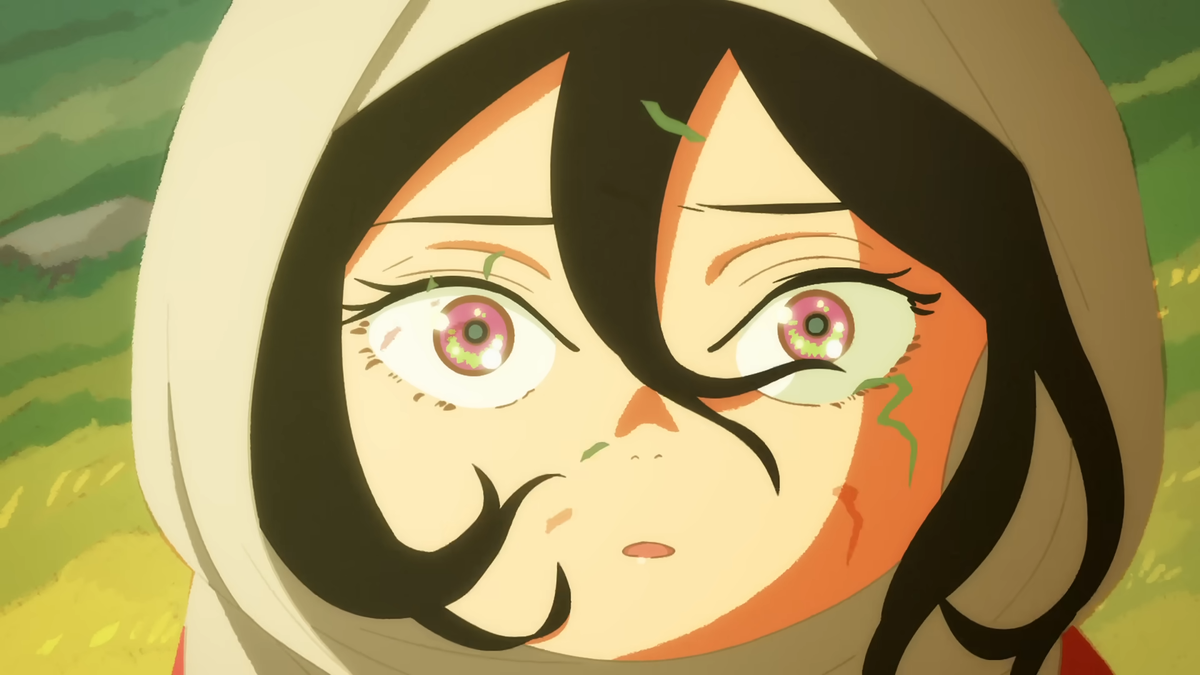




Main visuals from the Jaadugar OP "Stella", performed by SEKAI NO OWARI Thanks to the research conducted by Tomato Soup herself, we are fortunate enough to have a sufficiently detailed picture of the __geopolitical background of that specific period__: the events narrated and the locations mentioned (such as the town of __ Tus__, in which the story begins, or __Nishapur__, where Muhammad, the son of Sitara’s mistress, goes to study) are real places that were indeed invaded by the Mongol army during Genghis Khan’s __expansion campaign__. Tus, in fact, was almost completely destroyed during the __Mongol conquest__ of __1220–1259 AD__. It should be noted, however, that to craft a plot without major gaps or excessive time jumps, much of the cast (with the exception of the main characters and members of the royal family) or all the minor events occurred are a product of the author's imagination. The mangaka and anime artists both did a great job with all the careful details of the architecture, clothing, jewelry, daily used objects, etc. both in Tus and in the Mongol steppes. Very well researched. In an interview on the website _Ananweb_, the author expressed her interest in Medieval History, specifically the story of a __mysterious Muslim slave woman__ who allegedly manipulated the Mongol royal family through __[Töregene](https://anilist.co/character/361640/Tregene)__, the sixth wife of the Khan’s [heir](https://anilist.co/character/399632/gedei) driven by conflicting feelings regarding the Mongol Empire, thereby becoming the primary inspiration for her story. 
But it is not just about History; "_Jaadugar_" is steeped in __Culture in every sense__: it touches upon __political, military, and bureaucratic affairs, religion, astronomy, geometry, archaic medicine (mainly based on Eastern alchimy basics)__, and extending to decidedly more humble and typically nomadic tasks such as __pastoralism and local music, dance, or cuisine__. Speaking of culture, __Euclid’s "Elements"__, aka __the most important mathematical work to have come down to us from ancient Greek culture__ and __the first formulation of what is known today as Euclidean geometry__, lies at the heart of the story as the casket (or rather, the Pandora's box xD) of the events from the very first episodes. Above: two scenes from the series; bottom: the oldest surviving fragment of an edition of Euclid's Elements, a papyrus from central Egypt dated c.100. Complete versions of the Elements have reached us via transmission of the numerous translations and copies that were made by the civilizations that have risen and fallen since Euclid's work c.300 BC. 
It is because of this object that Sitara’s life takes an unexpected turn, bringing her into the presence of a regarded Mongolian princess and granting her a brand-new identity. "Whether or not one is a slave... Seeking knowledge is a duty for every good Muslim, in addition to being encouraged by the Hadith." Throughout this, "_Jaadugar_" immediately succeeds in vividly portraying __Persian culture and the nomadic ones from the Central Asian steppes__ (and __beyond__), presenting a work rooted not in invention but in genuine research, including its visual design. The work of __[Yuri Kabasawa](https://anilist.co/staff/146693/Yuuri-Kabasawa)__, the series' art director, proves highly effective both in depicting locations, situations, costumes, and objects, and in using these elements __to amplify the characters' emotions__. The characters themselves benefit from a distinctive design that echoes the simplicity of early manga, yet manages to convey what truly matters through just a few clean lines. 

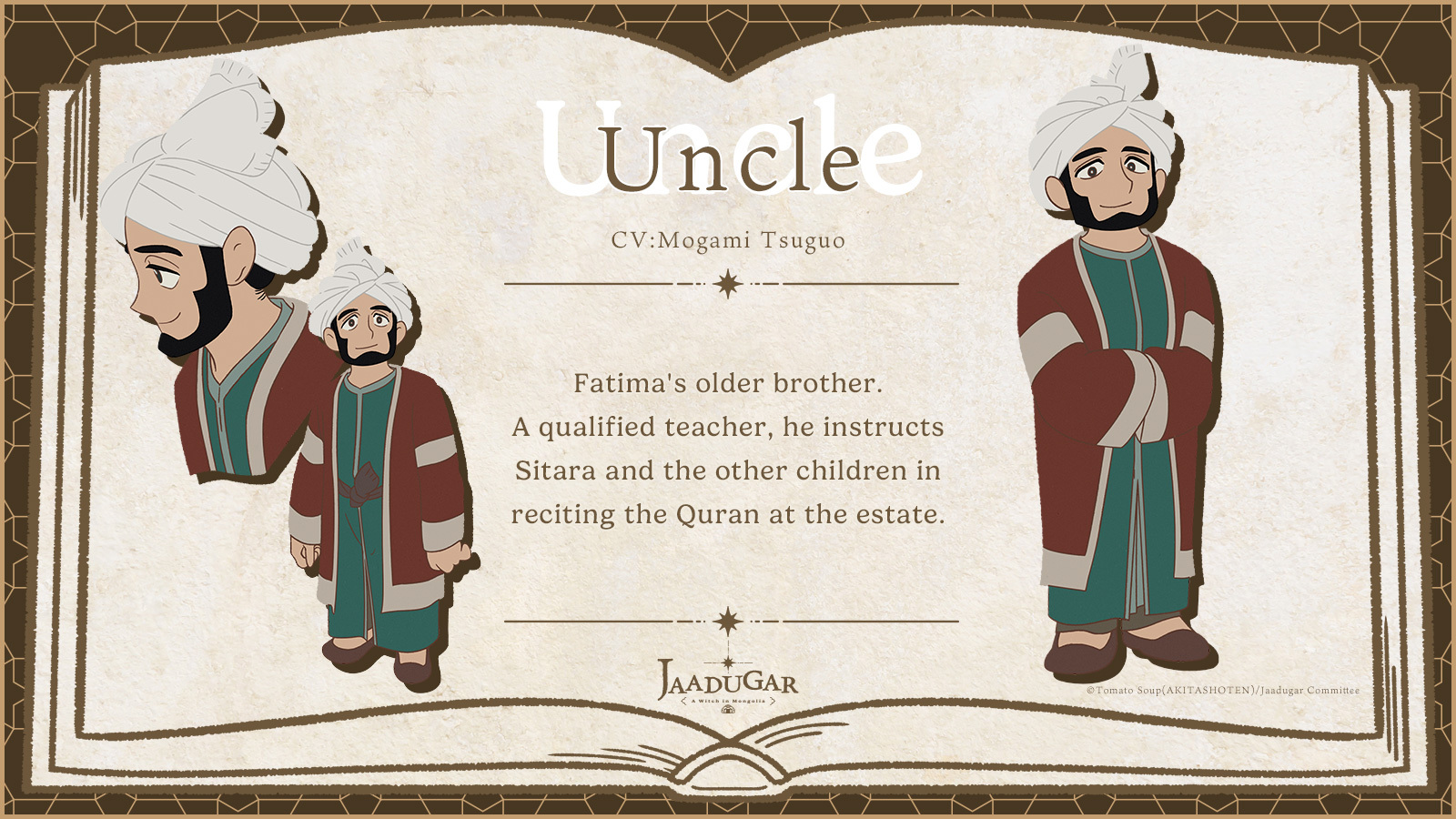


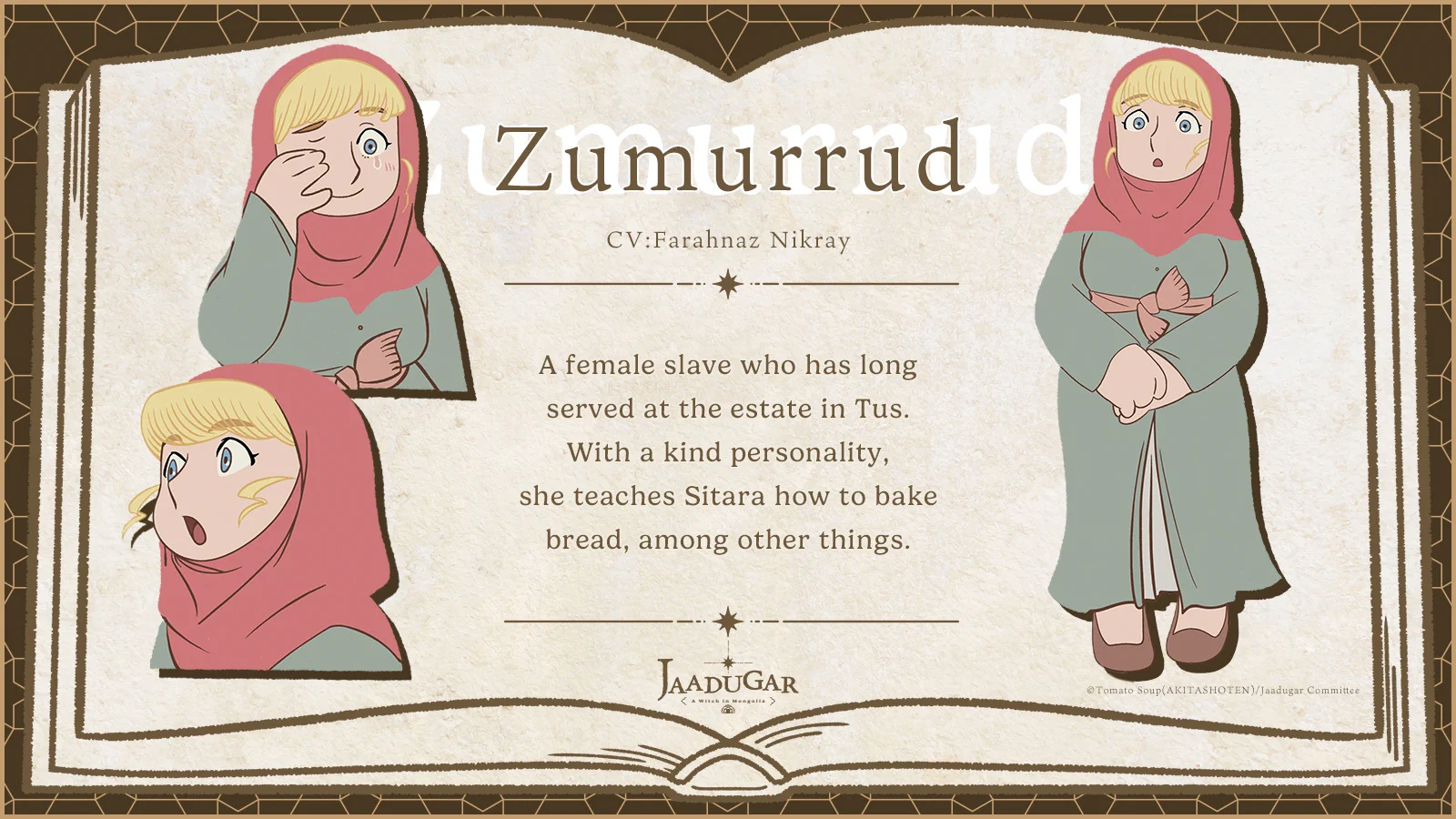
✦ː Jaadugar main characters introduction (and Qadaq xD) ː✦
THE CHARACTERS 
__Sitara__’s character is crafted with rare subtlety: __she isn't a heroine in the conventional sense__, since she possesses neither supernatural powers nor a destiny foretold by prophecy. She is a __wounded, furious individual__ who keeps her rage in check through constant, visible effort, knowing that letting it show would destroy her. __The tension between what she feels and what she reveals is the series' beating heart__, rendered through animation with breathtaking precision; a mere glance from Sitara, the way she tightens her lips or lowers her gaze a split second too soon, conveys everything left unsaid. 
Alongside her (or rather, in parallel) emerges the figure of __Töregene__, the sixth wife of __Prince Ögedei__. Though she enters the story relatively late, she immediately proves __central to the narrative structure__. Töregene belongs to the __Naiman people__; she was handed over as tribute to the __Merkit__ and subsequently __captured by the Mongols__ during the conquest of her clan. Her backstory, unfolded in a __flashback episode__ that stands as one of the season's most intense moments, reveals __a trajectory of pain, adaptation, and long-suppressed hatred__. While her background differs vastly from Sitara’s, __the essence of their experiences is identical__: when the two women recognize one another, not through words, but through that look of __"furious calm"__ known only to those who have mastered the __art of concealment__, the series finds its definitive __narrative anchor__. Their __alliance__ lies at the __heart of the story__, and the prospect of seeing it unfold in the coming season is a compelling reason __to start watching this series__. 


Other noteworthy characters move around them: __Ögedei__, Genghis Khan’s successor, who is surprisingly mild-mannered and inquisitive, far removed from the image one might expect of the Great Khan’s son; __Tolui__, the brother with the greatest military aptitude, whose complexity gradually unfolds over the course of the episodes; __Sorghaghtani__, Tolui’s first wife and a devouted Christian, who understands better than anyone that the Empire must be consolidated through knowledge as well as the sword; and __Boraqchin__, a rival empress and political antagonist to Töregene, portrayed with sharp complexity by veteran voice actress [__Kujira__](https://anilist.co/staff/95103/Kujira) (best known as the voice of Orochimaru in "_Naruto_"). THE TECHNICAL SECTOR It's precisely in the characters that __one of "Jaadugar"’s most fascinating and distinctive elements__ manifests: the clash between __form and content__. The __graphic style__ is quite distinctive, featuring a deliberately doll-like, almost cartoonish design, with stylized bodies, simplified proportions, and faces that look as though they stepped out of a children's picture book. At first glance, these drawings call to mind __[Osamu Tezuka](https://anilist.co/staff/96938/Osamu-Tezuka)__'s artstyle (fun fact: recently, I finished watching another masterpiece with strong Tezukian vibes, I’m talking about "__[Kaiba](https://anilist.co/anime/3701/Kaiba/)__", a 2008 anime created and directed by __[Masaaki Yuasa](https://anilist.co/staff/100068/Masaaki-Yuasa)__), yet Tomato Soup has stated that she actually sought to "imitate" __Medieval Art__ (specifically __manuscript illuminations and illustrations__) with their lack of __intricate detail or realism__. Technically, __Science Saru__ once again demonstrates why it is one of the most compelling studios in the contemporary anime landscape: the __color palette__, inspired by __Persian and Islamic miniatures__, alternates between __earthy, vintage tones__ and __sudden bursts of color__ that mirror the characters' emotional shifts. While scenes of daily life on the __Mongolian steppe, court settings, and religious rituals__ are treated with the same care as the dramatic moments. Thus, the character style faithfully reflects that of the manga, and in the series it's handled and animated with great skill, a few fleeting glances are enough to reveal the protagonists' thoughts and motivations. Highlights from every ep. of Jaadugar In reality, __what might appear simple is far from simplistic__ since the experiences these characters undergo are __anything but suitable for children__: __slavery, massacres, state violence, systemic misogyny, revenge, and grief__. The __gap__ between the __visual style__ and the __harshness of the themes__ is not a contradiction, but a deliberate and extraordinarily __effective choice__. That seemingly innocuous character design lowers the viewer's defenses, fostering a sense of almost childlike familiarity with the characters, only to leave the audience completely unprepared for the emotional impact of their ordeals. It is the same principle that makes certain animated films some of the most devastating visual experiences in existence: __the reassuring form amplifies, rather than softens, the weight of the story being told__. Also, this __contrast__ between the __characters' childlike faces__ and the __tragedies they must endure__ prompts reflection on __how a story set centuries ago remains so dramatically relevant today__. Is Sitara/Fatima’s long journey to Mongolia, undertaken alongside __hundreds of other slaves and prisoners__ amidst __death, slaughter, cold, and hunger__, not a reflection of events we see unfolding daily across the globe? Finally, from a musical standpoint, [__Kōshirō Hino__](https://anilist.co/staff/384061/Koushirou-Hino)’s score strikes an emotional chord that resonates throughout the series, while the opening theme by __Sekai no Owari__ and the closing theme by __Queen Bee__ both perfectly capture the work's tone. Tenmaku no Jaadugar OG SOUNDTRACK by Koshiro Hino: https://open.spotify.com/playlist/5Z9XQUweMhU6ADqy30AFYk 


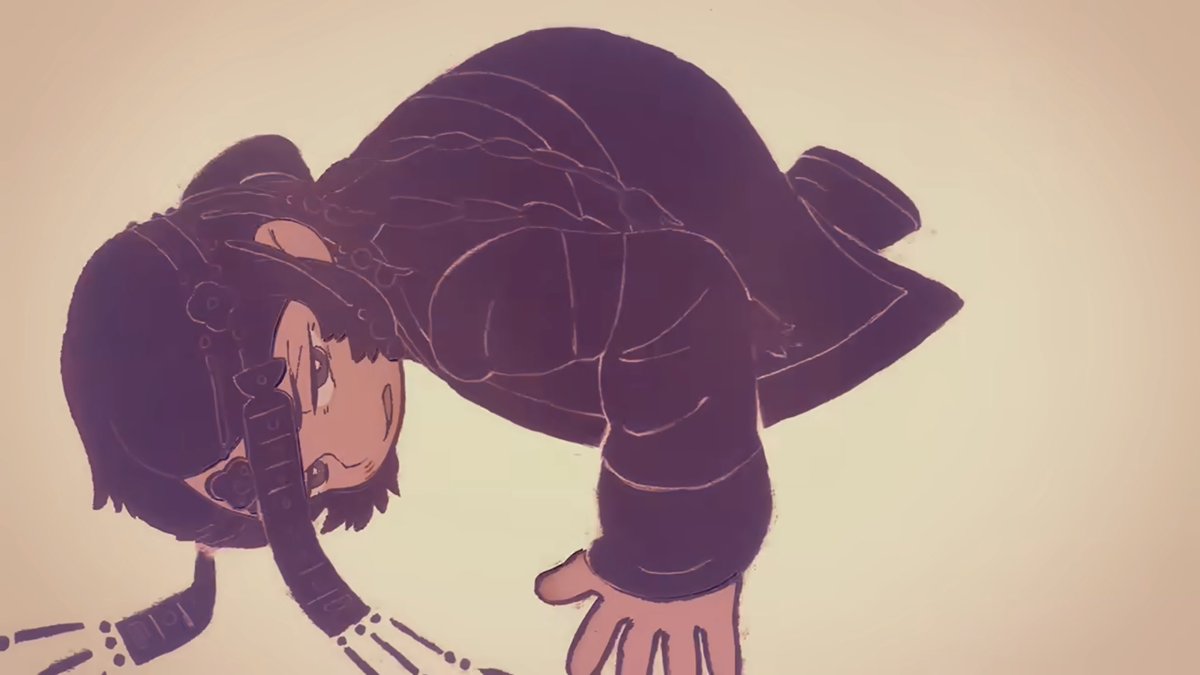
Main visuals from the Jaadugar ED "Star", performed by Queen Bee + BONUS: Hand-painted shot from "Jaadugar" ED
Last but not least, another highlight in "_Jaadugar_" is the reflection on the __condition of women__, on their role in a society so far removed from our own in both time and place (speaking in very broad terms), yet not difficult to understand or feel a connection to. What I loved most, beyond the __symbolic act__ of forging a path through life while wearing a __false smile__ (a sign of a life forced to appear perfect or which needs to stay in its place, even while inwardly torn apart by aching intimate tragedies), was the repeated emphasis placed on the __importance of education and knowledge__, particularly on this gender. Sorghaghtani Beki, Khulan, Fatima, Boraqchin Khatun, Töregene and Sitara __Learning, absorbing, and observing as much as possible is the most powerful tool one can possess for self-defense__. And this is what Fatima does: __she chooses to live and to understand as much as she can about the culture, customs, and lifestyle of those who stripped her of everything she had__. She knows that only in this way can she survive (and perhaps one day exact her revenge) but above all, become __the master of her own life and destiny__. 
SO... IS JAADUGAR A WORTH-WATCHING ANIME SERIES OR NOT REALLY? (MY PERSONAL THOUGHTS) A priori, I'd say. "_Jaadugar_" is what I would call a small pearl hidden in the depths of the ocean, a work of art capable of intriguing from us _rekidan_ (history enthusiasts) to those less accustomed to this genre and, in this specific instance, given the animation studio's masterful execution, a breaking down enrichment for the soul. Be warned, however: at first it might strike you as something "alien", and __not just because of the art style or the two relatively unfamiliar cultures, but because the series opens by "contradicting itself".__ Cover from Jaadugar's Official Fanbook In addition to the __sections on Geometry__ and __ancient measurements__ which might leave you looking as bewildered as Sitara in the first episode, __the normalization of slavery__ (viewed almost as __a bond of affection and a condition of potential social equality__ in Muslim cultures) or __the acceptance of female seclusion by highly cultured__, sensitive women might prove off-putting given __modern sensibilities__, __progress__, and __contemporary stereotypes__. The style __doesn't sensationalize__ these elements, yet the "__unbearable lightness__" with which the Mongols carry out massacres can be deeply unsettling. And speaking of Mongols, their ingenuity in __timekeeping__, their __superb organization__, and their __pursuit of foreign knowledge__ are also depicted, traits almost worthy of __admiration__, were it not for the casualness with which they __killed and deported people__. In short: there are numerous "__culture shock__" moments that we must process, bearing in mind that this is __a different era, place, and civilization__. So, it seems as though "_Jaadugar_" begins by constructing an oxymoronic reality, one far too serene to reflect the lives of the people within it. There are too many smiling faces, too much care and attention lavished on the "merchandise"; from the very start, there appears to be an exaggeratedly idyllic romanticization of war and slavery (specifically of women), enough to make one wince. However, I think the unreality of this part is undoubtedly intentional, serving as a counterpoint to what the series is about to depict, thereby generating even greater shock when that facade is shattered with raw, ruthless brutality. The life of Sitara thus promise to be fraught with perils and harrowing moments; yet, the character development, the focus on her growth, and the musical rendering of her emotional journeys are already rock-solid, revealing themselves from the very first moments as the true beating heart of the series. Furthermore, the bonds between the characters form the backbone of the entire narrative, through thick and thin; it is precisely through these connections that the story is expected to unfold, taking the viewer on a journey that is both historical and emotional. 

"Tenmaku no Jaadugar" TV Anime Blu-ray Box covers; bundled all-12 episodes of the anime, out February 3, 2026 What I think is that to engage with this title, the average viewer must realize that __approaching this kind of story requires stepping outside a present-day mindset__: understanding the culture and knowledge of the era in question is essential (and in some aspects off-putting) to grasp a picture that is consistent with the History itself, and subsequently with the narrative. After all, this is a historical period where slavery is socially accepted and taken for granted; anyone living at the time who harbored aspirations of equality would certainly seem out of step, and not to mention the role of women within two hyper-patriarchal cultures. Violence and death were also far more commonplace than they are today (thankfully), meaning people were much more accustomed to them and normalized a reality that was simply part of their lives. So, let us not forget that we live, as did our parents before us, in one of the rare eras of human history with remarkably little conflict, whereas the characters in "_Jaadugar_" (both real and fictional) lived through a period that saw the highest number of countries involved in conflicts since WWII. >#In conclusion, kudos both to the author and for the studio for the __historical research__, the __unusual style with its miniaturist-like detail__, and the way they handled the __importance of culture and contrasting relationships__, all while __acknowledging the brutality of the losses__. >#It was surely a __challenging work__ (whether in manga or anime form), but in both cases the resulting outcome is undeniably __convincing and compelling__. 
"__Tenmaku no Jaadugar – A Witch in Mongolia__" is __a godsend in the animated series scenery__, something truly unusual in terms of both content and style. Through its __universal story__ and __themes__, we gain insight into a chapter of __medieval history__ from __distant lands__ that are rarely studied or well-known in our culture. And thanks to __Sitara/Fatima__, we can once again appreciate the __power of knowledge__ and the __importance of learning__, even in the most challenging situations. Slavery, the importance of knowledge, the fight for freedom, and the quest for hope are timeless themes, and far from simple ones to tackle. Yet, "_Jaadugar_" seems ready to take on the challenge, backed by a top-tier team that has already demonstrated its ability to blend emotions, words, and whispers with a soundtrack that evokes the setting and the characters' sighs, a screenplay that seems to anticipate the viewer's emotions, and visuals and movement that speak volumes even in silence. Furthermore, the childlike art style, complemented by a very mature rendering of backgrounds and lightings that adds a way more depth and sense of immersion, creates a striking contrast with the intensely dramatic narrative on an ordinary girl violently torn from her homeland. Ultimately, a story that seems extraordinarily relevant, today more than ever. !ممنون از خواندن/Уншсанд баярлалаа! 
melamuna
A refreshing tale of vengeance via quest for agency in the middle of tragedyContinue on AniList

Just looking at the current lineup of anime spanning from a few years back, you'd definitely feel like most of the anime you've seen are just a rehash or a recycling of a series you've already watched before. This is especially true when you watch seasonal anime regularly, with romance, battle shounen, and fantasy anime like isekai plaguing the landscape to a point where you definitely struggle to discern the difference between each anime within its genre.
Though some people would enjoy that, after all, it's safe and familiar, a lot of us here would definitely like to find something that stands out above the rest. But sometimes, we don't want something that's the best of its genre, but another anime that has an original premise.
In yesteryears, we had Orb: On the Movements of the Earth, which took us to Europe and a quest that's life or death. Now, in 2026, a new anime pops in that, once again, takes us away from the confines of Japan and to one of its, albeit overlooked, neighboring countries, Mongolia, back in time, as we follow the life of a girl who'll seek revenge for her lost life. ***

We follow the character of Sitara, who lost her loved ones because of rising political tensions in her homeland. But instead of looking backward and accepting her circumstances, she chose to embark on a lifelong quest for revenge, using her intellect and wit. Of course, given her age and the nature of what she's fighting for, it would take a lot of obstacles, lessons, and a long adventure to gain the wisdom and strength needed for her calculated revenge plot.
What I really love about this series is that it definitely abandons the customs we're used to seeing in modern Japan within the anime scene and embraces an entirely different culture, lifestyle, and set of circumstances. Namely, it takes place in the 13th-century Mongol Empire, which spanned from modern-day East Asia to the Middle East. This is an entirely different environment to explore in the anime medium, and it doesn't stop there, as it completely embraces what it was like to live in this era through the lens of our main character, but also the people surrounding her.
You'd feel throughout the entire series how constrained the common folks are, forced to take on roles they never asked for and perpetuate them as if they were just. The anime is not afraid to convey its message of breaking away from that cycle and uncovering the unseen potential of people if it weren't for the fixed system, all through the lens of multiple characters. At the same time, it shows how difficult it is to break away from that cycle due to the rigidity of the system.
Sitara is not just one of the countless girls who are victims of a war that wasn't instigated by them. She's just one of many people out there who have to live and accept that their lives aren't truly theirs, and that their sole purpose is to remain under someone else's grasp.
Of course, if we view it through today's lens, it's absolutely wrong. But for the people living in this era, given how dire the situation was, it was simply a part of their predetermined normal life—something that Sitara, and other characters in the series, simply wouldn't accept.
It creates this battle of ethical and moral dilemmas among various characters with an added flair of curiosity of the customs of this specific era that keeps people watching, hooked, and intrigued for what comes next.

Another standout of this series, and one that caught people's eyes, is the animation, particularly how different it looks in a sea of similar-looking anime. Its art style closely resembles other animation mediums that adapt Middle Eastern culture and styles, such as the popular film The Breadwinner by Cartoon Saloon, mixed in with traditional Japanese animation. You get this unique blend of two cultures that is pleasing and refreshing to watch, and Science SARU deserves 110% credit for this.
Each frame can literally be a wallpaper piece, given how scenic the landscapes are and how expressive the characters are. You can tell from their faces about their intentions and their long history of oppression. It's definitely an animation style that stands out from the rest this year, and it's something we might not get to see again for a long while. ***

If you want to watch something different from what's already available, A Witch in Mongol serves your palate with a different culture and a familiar quest for vengeance. Its attractive art style shouldn't fool you into thinking this series can't be dark at certain moments, as it doesn't shy away from its harsh themes. And most definitely, it's one of this year's overall best anime that you shouldn't miss out on.
It's a reminder that the anime medium isn't limited to what we're already used to, but can tell stories from afar and adapt to various different art styles. ***

Yonkou
Captivating due to the Meticulous detail brought about by a passionate team and authorContinue on AniListCaptivating levels of Detail What really captivated me with this show is the minute details throughout the 12 episodes. Given that this is historical fiction, there should be a level of immersion achieved by bringing the past to life. The show achieves it within minutes. You hear a beautiful recitation of the athan from a muslim based in Uzbekistan. It's the perfect example of a small detail that elevates a show to a different level. It's the little things like that which go a long way, and the show is full of them. They had Mongolian sumo wrestlers speaking Mongolian in episodes 1 and 2, Mongolian drums for the soothsayer scene to convey an authentic sound, a depiction of wudu, etc. That's something that just speaks to the attention to detail that the anime team strived for, complementing an author (Tomato Soup) who really tries her best to do her research. It's a perfect combo. There is also attention to detail in the design of the characters and the environments of various locations. The way the buildings in Persia looked, the Mongols' tents, and the clothing of both groups were other ways the series felt alive and real. You see the painstaking level of detail that the artists and the author went out of their way to include. There was also the way they demonstrated the various behaviors and customs, too. Throwaway lines about how muslims drain the blood from their meat, while Mongols make sure the blood remains. The way Sitara has henna on her fingertips. The mangaka and anie both did a great job with all the minute details of the architecture, clothing, armor, the steppe, daily objects, food, etc. It's very well researched; you can tell the anime team did some on-site visits for some locations. Even though this is a story about specific individuals, it still goes out of its way to portray the various cultures/ groups within the story down to the smallest details. It's to the point where you actually learn a lot about both groups, even though learning about these people isn't the point of the show, but a byproduct of the passion and work of the author, as well as the anime team. The author and anime team also really, really, really excel at nuance. With figures such as Genghis Khan and his warmongering sons, it's extremely hard to depict how vicious they are, but while keeping the human element. You risk falling into the trap of "whitewashing" their character and actions. You have to demonstrate the atrocities they willfully and happily committed while also balancing the fact that they are still people, so they had a human side to them. This story excels at it. They don't pretend they weren't that bad or attempt to whitewash their crimes to win over the audience. Instead, they play it smart by showing how brutal they are with outsiders, while how kind, caring, and admirable they are with their own people. By showing these 2 facets of the group/people, we gained a more holistic view of the Genghis brothers without setting their crimes aside. Tolui himself acknowledges that what he has done is wrong without showing any remorse before he drinks the poison. You also have Sitara, a primary victim of Mongol brutality, feeling varying degrees of sympathy and compassion for the Mongols, because she sees the humanity in this group. You can tell it's done well because of how so many of us felt sympathy for the hardships that befell some of the Mongolian characters, notably Ogedai, Tolui, and Sorghaghtani. It was a natural emotion brought by a natural, multifaceted depiction of the Mongols. You see how the brothers were warmongers, killers, and politicians, but also that they were husbands, fathers, and leaders. That nuance also applies to the depiction of the woman. Yes, they were victims, it is undeniable, and should not be dismissed. But they also had a lot of agency, willpower, and strength. They made major decisions, stood up to the men, and participated in political discussions. Now, some of this is complete fiction, like the current empress and her scheme. But the woman's role in the council is historically accurate. I really like that we see the suffering and vulnerability of these women without the varying strengths and influences they each had being set aside. Shows often portray women in history as mere victims, devoid of agency or ability, but the author (having done her research) knew the women of the Mongolian empire were more than that. The show is also very emotionally poignant because the circumstances of many of these characters, especially Sitara, really did happen in history. That's what made the first 2 episodes such an emotionally painful watch because even tho its fiction + animation, it felt all too real knowing the history of the Mongols. The voice acting, immersive sound/music, and the visuals combine to make you lose yourself in the story and setting. I rarely ever tear up watching shows/movies, but somehow they had me in just 2 episodes. On a more personal note, I have been watching anime since before I even knew my multiplication, but somehow the thought of Islam or muslims being a key part of a story had never ever crossed my mind. Maybe it's because I never really thought it would be done tastefully, but just hearing the athan from minute 1, it felt like 2 very different parts of my world colliding. It felt so unreal that I had to start the episode over from the beginning. I was stunned. I'm really impressed by how much the author understood about us and how much research she (and the anime team) must have done to really get all the little things about us right. I think nothing else demonstrates her understanding of our religion/culture as the line "Seeking knowledge is the sacred duty of every Muslim." It's the essence of how we should live, and she fully understood and portrayed it with her characters. I also love the way the anime team animated the wudu; it was accurate and well done (though you don't have to be topless to do it, lol). I like that they go out of their way to see how something is done and put it in the show. It's the little things that go a long way after all. So yeah, extremely impressed from a more neutral standpoint and really, really moved on a personal note. I learned a lot of new history about the most important figures of the Mongolian Empire, as well as subtler tidbits about Mongolian culture. Hope we get a season 2, but before then, I will hopefully have the manga volumes in my hands. Besides one exception, I don't buy manga, but I really loved the adaptation of the author's work, so I want to support it. I hope the author and the anime are proud of their creation. It's excellent historical fiction and one of the best/memorable anime in recent times.
~~~~~~




COMMENTS
0 Comments
SIMILAR ANIMES YOU MAY LIKE
 ANIME2023, DramaThe Apothecary Diaries
 ANIME2024, DramaOrb: On the Movements of the Earth
 ANIME2019, ActionVinland Saga
 MOVIE2013, DramaThe Tale of The Princess Kaguya
 ANIME2021, ActionRanking of Kings
 ANIME2012, ActionMagi: The Labyrinth of Magic
 ANIME2018, DramaViolet Evergarden
 ONA2021, DramaThe Heike Story
 ANIME2019, FantasyAscendance of a Bookworm
 ANIME2008, AdventureSpice and Wolf

SCORE
- (4.15/5)
TRAILER
MORE INFO
Ended inSeptember 12, 2026
Main Studio Science SARU
Trending Level 5
Favorited by 1,422 Users
Hashtag #JAADUGAR #AWITCHINMONGOLIA