

OTOMEN
STATUS
COMPLETE
VOLUMES
18
RELEASE
November 26, 2012
CHAPTERS
74
DESCRIPTION
Asuka Masamune is a guy who loves girly things--sewing, knitting, making cute stuffed animals and reading shojo comics. But in a world where boys are expected to act manly, Asuka must hide his beloved hobbies and play the part of a masculine jock instead. Ryo Miyakozuka, on the other hand, is a girl who can't sew or bake a cake to save her life. Asuka finds himself drawn to Ryo, but she likes only the manliest of men! Can Asuka ever show his true self to anyone, much less to the girl that he's falling for?
(Source: VIZ Media)
Notes:
- Includes the one-shot "Glass no Otomen: Sen no Kamen wo Motsu Kinoto Otoko (ガラスの乙男)".
- Includes the one-shot "Love Chick (らぶちっく)".
CAST

Asuka Masamune

Ryou Miyakozuka

Juuta Tachibana

Hajime Tounomine

Kitora Kurokawa

Iruka Sakiyama

Kiyomi Masamune

Hiromi Yoshino

Yamato Ariake

Gen
CHAPTERS
REVIEWS

NapoJ
Cosas de Chicos / Cosas de Chicas (reseña en ESP y ENG)Continue on AniListLa siguiente reseña está en Español e Inglés (traducida con el apoyo de DeepL)
La versión leída es la traducción al español por Midoriko de “Black Bird no Fansub”
Primer manga de Aya Kanno que supera una serialización de 20 capítulos, publicado entre 2006 - 2012, tuvo una adaptación Live Action en 2009 de 12 episodios, aunque el trabajo más famoso de la autora es Baraou no Souretsu, el cuál tuvo adaptación animada en 2022. Por ende, a Otomen se puede considerar el trabajo que impulsa a la autora, un Shoujo centrado en explorar a los arquetipos generalmente asociados al género.
Su romance está estructurado en la relación entre un hombre ideal con gustos “femeninos” y una mujer con actitudes “masculinas”, rodeados de secundarios que de alguna manera se relacionan a la temática principal. Desde esa premisa se vuelve evidente la lección: Los gustos no deberían regirse al género, somos quienes somos, nuestros intereses no deberían encasillarnos en la imagen social construida en el contexto que nos rodea, ni tampoco reducir la complejidad de la identidad a únicamente unos aspectos.
Esto envuelto en una presentación ligera y divertida, de constante repetición de esas ideas en los diferentes personajes. Y en principio me resulta de amplio interés, las obras que sé expresan en favor de esa complejidad de la personalidad e identidad retando los prejuicios asociados al género me parecen fundamentales, sobre todo en el rol masculino. Asuka como ejemplo masculino no se ve reducido, sus variados gustos sólo conforman parte de quién es, y no le tacha de servir como modelo a seguir para otros que le rodean.

Como tampoco sucede con Ryou, no es tan protagónica como Asuka, más también tiene un desarrollo, esté enfocado en la atención y comprensión de los demás. Juntos son una encantadora pareja, y los otros personajes secundarios también tienen en mayor y medida esa evolución guiada hacia la aceptación de quienes son, lo que les conforma, y hacia dónde quieren llevar su camino.
Mi principal inconveniente es lo mencionado “constante repetición”, el manga dura más de lo que debería. Aún habiendo variedad de las situaciones gracias al contexto en los diferentes personajes, la lección queda clara más bien pronto, así que repetirla una y otra vez resulta cansino. A veces se solventa porque se enfoca en la evolución de la pareja, o sencillamente capítulos enteramente cómicos, y en ese caso depende de tu nivel de “credulidad” al respecto.
Lo último está referido a que precisamente por alargar su duración se presta a situaciones absurdas habiendo “obstáculos” o malentendidos exagerados. Lo anterior es aprovechando las típicas situaciones escolares sea salidas escolares, festivales o los campeonatos deportivos. Si bien alguna que otra situación podía serme divertida, eran la excepción; es notable la inexperiencia de Kanno en manejar una serie a largo plazo, sobre todo habiendo establecido prontamente sus principales lecciones temáticas.

Reitero que el abordaje temático es lo suficientemente sólido para considerar que una obra destilada en sus elementos se hubiese asentado mejor en mi recuerdo. Aún así, en su extensión permitió la inclusión de hobbies y postres, así que no se le puede considerar enteramente un despropósito.
Otro aspecto notable de su duración es la evolución en la identidad visual de la obra, notablemente mejoran los trazos sobre todo en la representación de las emociones, habiendo miradas de gran expresividad durante sus últimos arcos. También hay notable mejoría en el detalle y dedicación en los postres, tejidos, artesanías y decoraciones; como en las florituras propias del Shoujo, especialmente en los fondos para momentos clave.
En cuánto a composición, a contadas excepciones, la ubicación y posicionamiento de los elementos es en términos conocidos, de tal manera que la lectura resulta amena para su duración de 40 - 50 páginas por capítulo. En el diseño de personajes es notable esa mirada femenina sobre los personajes masculinos de clásico aspecto “guapo”, y en cierta sensibilidad en cómo tratar los diferentes aspectos de la temática.
Otomen es un Shoujo que se estructura en una dinámica para contrastar las expectativas asociadas a un arquetipo y la personalidad del individuo. Cumple sobradamente aún a expensas de la historia que llega a ser, y aunque me lamente eso, sí que agradezco la validación acerca de que los gustos nos conforman, y nuestros principios e intereses es lo que nos valida, siempre siendo fiel a lo que queremos llegar a ser y cómo queremos ser identificados.

English
Otomen was the first manga by Aya Kanno to surpass a serialization of over twenty chapters. Published between 2006 and 2012, it received a 12-episode live-action adaptation in 2009. Although Kanno’s most famous work is Baraou no Souretsu—which later received an anime adaptation in 2022—Otomen can be considered the work that propelled her career forward: a Shoujo manga centered on exploring the archetypes commonly associated with the genre.
Its romance is structured around the relationship between an “ideal man” with traditionally feminine interests and a woman with more conventionally masculine attitudes, surrounded by supporting characters who each connect to the story’s central themes in one way or another. From this premise, the core message becomes evident: our interests should not be dictated by gender. We are who we are, and our hobbies should neither confine us within socially constructed expectations nor reduce the complexity of identity to only a few defining traits.
All of this is wrapped in a lighthearted and entertaining presentation, constantly revisiting these ideas through its various characters. At its core, this is something I find deeply compelling. Works that advocate for the complexity of personality and identity—while challenging prejudices associated with gender—feel especially meaningful to me, particularly regarding masculinity. Asuka, as a male example, is never diminished by his interests; his varied hobbies simply form part of who he is, without preventing him from becoming someone others admire and look up to.

The same applies to Ryou. While she is not as central as Asuka, she still undergoes her own development, focused on understanding and caring for others. Together, they form a charming couple, while the supporting cast also experiences growth to varying degrees, gradually moving toward acceptance of who they are, what defines them, and what kind of future they wish to pursue.
My main issue lies in what I previously mentioned: the “constant repetition.” The manga lasts longer than it probably should. Even though the variety of situations and character contexts helps maintain some freshness, the core lesson becomes clear rather early on, so reiterating it repeatedly eventually grows tiresome. At times this is mitigated through the evolution of the main couple or through entirely comedic chapters, though in those cases much depends on the reader’s tolerance for the story’s exaggerated scenarios.
That latter point specifically refers to how the extended length leads to increasingly absurd situations involving exaggerated misunderstandings and forced obstacles. These often take advantage of familiar school-life settings such as school trips, festivals, or sports tournaments. While certain moments did manage to amuse me, they were more the exception than the rule. Kanno’s inexperience in handling a long-running series becomes fairly noticeable, especially after having established the manga’s primary thematic ideas so early.

Even so, I reiterate that the thematic approach itself is strong enough that a more condensed version of the work might have left a stronger impression on me. Still, its extended runtime also allowed for the inclusion of hobbies, desserts, crafts, and domestic details, so it would be unfair to dismiss the experience entirely as unnecessary.
Another noteworthy aspect of its length is the evolution of the manga’s visual identity. The artwork improves considerably over time, especially in the representation of emotions, with highly expressive gazes appearing throughout the later arcs. There is also visible improvement in the detail and care devoted to desserts, knitting, handicrafts, and decorative elements, as well as in the quintessential Shoujo flourishes, particularly the elaborate backgrounds used during emotional moments.
As for panel composition, with only a few exceptions, the arrangement and positioning of elements remain familiar and easy to follow, making the reading experience pleasant despite the lengthy 40–50 page chapters. The character designs also clearly reflect a feminine perspective on the traditionally “handsome” male archetype, along with a certain sensitivity in how the story approaches its thematic concerns.
Otomen is a Shoujo manga built around contrasting the expectations tied to archetypes with the individuality of the people behind them. It succeeds remarkably well despite the flaws the story eventually develops, and although I regret some of those shortcomings, I still deeply appreciate its validation of the idea that our tastes are part of what defines us, while our principles and interests are what truly give us value—always remaining faithful to who we wish to become and how we want to be perceived.

COMMENTS
0 Comments
SIMILAR MANGAS YOU MAY LIKE
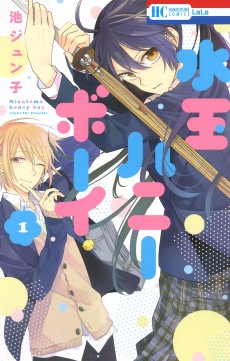 MANGA ComedyMizutama Honey Boy
 MANGA ComedyBehind the Scenes!!
 MANGA ComedyDanna-san wa Onee-san
 MANGA DramaDance Dance Danseur
 MANGA RomanceIn the Clear Moonlit Dusk
 MANGA ComedyMy Dress-Up Darling
 MANGA ComedyAi Ore! Love Me!


SCORE
- (3.6/5)
MORE INFO
Ended inNovember 26, 2012
Favorited by 92 Users