

GOGO MONSTER
STATUS
COMPLETE
VOLUMES
1
RELEASE
September 10, 2000
CHAPTERS
5
DESCRIPTION
Third grader Yuki Tachibana lives in two worlds. In one world, he is a loner ridiculed by his classmates and reprimanded by his teachers for telling stories of supernatural beings that only he can see. In the other world, the supernatural beings vie for power with malevolent spirits who bring chaos into the school, the students' lives, and nature itself.
(Source: VIZ Media)
CAST

Yuki Tachibana
Sasaki

Ganz
Makoto Suzuki
CHAPTERS
REVIEWS

Leonardok
GoGo Monster // infância e memóriaContinue on AniListo mistério latente no olho de um coelho. em linhas gerais, essa é a história de um garoto em uma escola. escola que, aos poucos, se revela um verdadeiro ecossistema, um ambiente vivo, suscetível a ordens e desordens. respirando por seus poros - por suas árvores, hortas, pela voz de suas crianças. ora mundana, ora mística, mas sempre sugestiva, dotada de significados. seja nos espaços comuns em que a chuva cai ou em seus andares secretos. e sozinho nessa escola está o garoto, um sujeitinho muito particular, atento a essas minúcias do seu entorno. dotado de uma sensibilidade rara no trato com tudo que não é humano, e incapaz de se integrar minimamente a sua classe. ao contrário, enxerga nesses espaços seres e estruturas que ninguém mais vê, e é a partir deles que se relaciona com o mundo. já no início da história o rapaz se encontra em crise. ele anda percebendo um movimento atípico desses entes invisíveis, um movimento que o perturba na medida que o tira de uma posição central daquele mundinho. estão o deixando de lado e se tornando signos cada vez mais sinistros. é desse ponto que partimos.
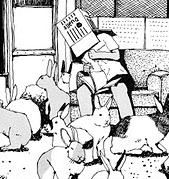
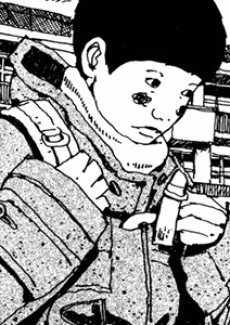
aterrorizado por Eles e descrente com o lado de lá, tachibana se vê entre duas figuras importantes. susuki, um quase amigo que não o entende bem, mas gosta dele. e sasaki, ou qi, seu similar mais velho e bem versado, que usa das palavras para Explicar. cada um representa uma alternativa para o peculiar tachibana, apontando caminhos distintos para se relacionar com o mundo de que é alienado. com o primeiro, estabelece uma conexão sentimental, entre dois sujeitos. afinados não por serem iguais - susuki não é um excepcional como tachibana, "meu boletim é cheio de bês" ele repete. o elo que une um ao outro é também o que une os dois ao mundo: uma preocupação com as flores, com o zelador, com o som da gaita, com o espaço da escola, com a sugestão - "quando eu olho pros aviões, sempre me pergunto de qual lugar eles estão vindo". observando tachibana, susuki também percebe o que ninguém mais percebeu. Já qi, veterano excêntrico e solitário, olha para o jovem tachibana e busca esclarecer, explica-lo o que se passa em seus sentidos. desencantar essas figuras que povoam seu mundinho. a escola é sua jaula, superstar sua vontade, os seres de lá seus medos. e suas visões, freud explica. no meio disso está nosso garoto, já para além de uma dúvida radical. “tudo que você escuta com os ouvidos é mentira, tudo que você vê com os olhos não passa de ilusão”. buscando uma base perdida. uma porta preta no fim do escuro.
há um tema recorrente na história, repetido pelos adultos, de que os mais velhos devem ser responsáveis, se portar bem, como figuras exemplares, posto que os mais novos se espelhariam neles. que é essencial para a manutenção da ordem. em um momento, frente a um professor desnorteado que perdera o controle de sua turma, o vice-diretor sugere que o real perigo não são as crianças sós como tachibana, relegadas ao desamparo, mas sim as que se unem. noutro ponto, uma professora confidencia desgostosa ao jardineiro que as crianças de hoje, seus alunos, as parecem alienígenas. naturalmente, a professora já foi criança. frequentou a escola, admirou seus ídolos e viveu seus dramas. e o tempo passou. ora, esse desconforto, essa alienação que a professora sente ao tratar com seus alunos não deixa de ser, em última instancia, uma questão pessoal sua. um reflexo da alienação de sua própria infância. conforme coloca zaza, a única distância possível da infância é o seu esquecimento. e ela se esqueceu, está podre e seu cérebro ficou duro que nem pedra. não consegue compreender os pequenos. e, como uma boa reacionária, opera antes de tudo sobre um instinto de autopreservação. como viemos parar aqui, se pergunta, e se antagoniza às crianças, assim como o vice-diretor. busca o controle. tornou-se covarde. é isso que tachibana teme. em contraste à figura do gantz, o zelador velhinho, de carne e osso, observador nato. eventualmente, ele revela a susuki que tachibana não é o primeiro de seu tipo. ao que parece, esses solitários - hipersensíveis e profundamente imaginativos - são partes essenciais da natureza daquele microcosmo. surgindo um após o outro, em diferentes contextos, tempos e espaços, independentemente. e falando das mesmas coisas, vendo o que ninguém mais vê. interessados na ordem de seu espaço. solitários, mas profundamente empáticos. eventualmente, se esquecem do que viram. mas surgem outros. como as flores que florescem ao acaso. e que não falham em ter consigo a verdade que uma flor tem ao florescer.

freekotaku
Analytical Review on GoGo MonsterContinue on AniListSPOILER WARNING: This contains spoilers for the manga. Read only if finished.
Introduction GoGo Monster opens with a third grader playing his harmonica on the school rooftop, calling to beings that no one else can see. Yuki Tachibana is the solitary third grader of Asahi Elementary School who is interested in the “other side”, but that “other side” is not the soul of the story. The soul is found in the inevitability of growing up in a society that doesn't accept those who are “different”. Matsumoto isn’t trying to distinguish whether or not the “other side” is real, but whether or not Yuki can find someone who could gently pull him through inevitable maturity. That very tension is why GoGo Monster speaks volumes to me that most stories don’t.
The "Other Side" Yuki doesn’t fit into his class, and the school shows that without much hesitation. His classroom is a hivemind, just kids who say the same thing, enforce a set norm, and shut out any kid who doesn’t follow said norm. Yuki speaks without much thinking, draws on desks, and talks to beings that aren’t there, and naturally, the result is complete and utter alienation. A third grader who has no one will find someone, even if they have to create that “someone” themselves.
The “other side” is Yuki’s response to alienation. Super Star, the “others”, they are not so much beings from another dimension as they are projections of Yuki’s desire to connect with the outside world, despite Yuki’s words that making friends is a dumb topic. We see faces in dark blades of grass, tiny sprays of water, leaves blown by the wind. That’s Matsumoto rendering pareidolia as art. Just as we project faces onto inanimate objects, Yuki projects “the others” onto his perception, using his harmonica to summon them into existence.
But what exactly does Yuki summon the “other side” against, if not his own adulthood? The rotting, mushy brains of adults. The airplane flies low over the school, yet every time, he keeps his head down, refusing to look, just as he refuses to look at his own growth. Super Star is more than a friend to Yuki, but also his source of validation. A star that shines on him, making him feel special. But even then, this is fragile. He starts to feel “the others” less and less, as he says in Chapter 2. His childhood fanaticism doesn’t last forever.
Inevitability of Maturity The airplane is the most recurring of the symbols in regards to how Yuki’s childhood won’t last forever. Chapter by chapter, the airplane flies low over the school. Makoto wants to ride it, with it being his own way of accepting maturity. But Yuki, initially, fixes his eyes downward whenever it passes by. That airplane is the future, the adult world, the plane he’d travel in if he were a mushy-brained adult. He refuses to acknowledge it because he doesn’t want to be it. It becomes a motif for his growth, since the time he finally looks at it, that is his time to grow.
In Chapter 3, Ganz cuts Yuki’s hair. Juxtaposed is Makoto talking about how Yuki seems different whenever he talks about Super Star, alongside the nasturtiums that bloom now, out-of-season. Matsumoto uses Makoto’s words and the nasturtiums to subtly announce Yuki’s near-change. He starts to become paler, grow physically, with the haircut being his most major change. In GoGo Monster, coming-of-age is not something the slightest bit gentle. No matter how much you try to stay the same, your body won’t.
Then, in a dream, a crow arrives on the veranda. The crow tells Yuki his time is little, and that he won’t see, nor hear anymore. This is not the adult side of life threatening him to grow, no. This is the “other side” itself, warning him of its fading. His own projections warn him of its impermanence. Even they know themselves.
What Ganz says to Yuki’s teacher in the chapter beforehand only strengthens this. Ganz, the school groundskeeper, has worked at Asahi Elementary School for thirty years. He has seen those like Yuki, yet he says cleanly to Yuki’s teacher: “Before long, he’ll forget he even caught a glimpse of it.” He’s seen a lot of things in his years, especially those who see and hear things that we can’t. They give their leader different names, be it Sasquatch, Giant, or Super Star. But always, always do they let go when the time calls for it. Ganz becomes the most accurate measure for Yuki’s inevitable growth.
Yuki’s “other side” was built to protect him from his own maturity, but it continues to crack and crack, and continues to fade more and more. He’s felt it ever since Chapter 1 when Super Star started to talk less to him. Yuki is running out of time.
The Death of Childhood In Chapter 4, Yuki sees a younger version of himself. The boy before him has darker skin, with hair that hasn’t been cut. The boy makes it clear that if Yuki wants to erase “them all” (the other side, the others, Super Star), Yuki has to erase him, the child self, first. IQ later diagnoses it as a Freudian double. In Freudian psychoanalysis, the double is a projection created in childhood to preserve the self against growing up. It is protective. It is narcissistic. But it is also an uncanny harbinger of death, a death to a childhood meant to be preserved. To meet your double is to be told that your childhood fades into death.
What follows is a climb through the school building, which has become Yuki’s “other side” itself. Moss spreads throughout the walls and stairs. Stairs that turn into nothingness. Walls that transform into something ornate. Animals talk to Yuki about the “black door”, warning him about it, whether it’s the dog or IQ’s rabbit. These are his subconscious, making their last effort to keep Yuki a child.
Soon, Yuki reaches the white room. The black door the animals warned him about stands before him. Behind him stands IQ, who also warns him that if he enters the black door, he can’t come back. The choice is purely up to Yuki’s own will. Yet, Yuki opens it anyway. But what he crosses through is not the liveliness of the “other side”, but darkness. Quiet, cold darkness. The further he walks, the further he drifts from his childhood, and towards adolescence.
Then, somewhere, a harmonica plays. It’s Makoto, on the school rooftop. He plays the same instrument Yuki once used to summon “the others”. But he’s not calling them like Yuki did. No, he’s calling Yuki himself. The harmonica that once pulled Yuki towards fantasy now pulls him towards reality, forming a light that Yuki carries through the dark. Rain begins to fall. The rain hits Yuki, and memories flood back. Holding IQ’s rabbit, Ganz asking if he likes flowers, Makoto asking to go home together. He swims through a pool, and a voice tells him that it is his turn. His time to bloom. And he does. Yuki regains consciousness in the real world, where Makoto awaits. When the airplane flies overhead, this time, Yuki faces it.
IQ remains in the white room, resisting his own coming-of-age. But it doesn’t work, since the very rain that hits Yuki reaches him too. This is the manga asserting maturity’s inevitability. No matter how much you retreat into a preserved childhood, the rain will find you. By the end, IQ’s box is off. He sits with his rabbits, carrying and thanking them. He does not thank Yuki, the kid he was interested in ever since the beginning. No, he thanks the rabbits, the ones that stayed by his side no matter what. Even the kid who obsesses over Yuki realizes that what saved him was not his own obsession. Rather, it was the companions who never left him.
Makoto stayed by Yuki’s path despite Yuki’s distancing, and the rabbits followed IQ through his coming-of-age. What we are connected to doesn’t matter. What does is if it stays by our side.
Conclusion We began with a boy who played his harmonica on the school rooftop, calling for otherworldly beings from the “other side”. And what we see as we progress through the story is the deconstruction of the “other side”. What Yuki realizes, and what Matsumoto shows us, is that the death of our childhood is not something to be avoided. It is inevitable, and it is difficult. IQ’s obsessive armor shattered, and so did Yuki’s otherworldly beings. But, what pulled Yuki through the treacherous path of adolescence wasn’t understanding or agreements, but simply a kid who was curious enough to ask “Was he awesome?”
That part of the manga is why I find it living in my mind. Makoto and Yuki’s friendship made me reflect on the people who stayed by my side, even when I distanced myself. There were some friendships I undervalued, and some I held onto too tightly. GoGo Monster made me see that connection shouldn’t be rooted in grand gestures, but through presence. Makoto helped Yuki not by being an extraordinary friend, but by just being there, and that clicked something in me.
“It’s your turn now. It’s time to bloom.”
~~__
COMMENTS
0 Comments
SIMILAR MANGAS YOU MAY LIKE
 MANGA DramaChildren of the Sea
 MANGA ActionDorohedoro
 ONE SHOT SupernaturalKurorohorumu
 MANGA ActionMob Psycho 100


SCORE
- (3.75/5)
MORE INFO
Ended inSeptember 10, 2000
Favorited by 262 Users