

ARJUNA
STATUS
COMPLETE
EPISODES
13
RELEASE
March 27, 2001
LENGTH
26 min
DESCRIPTION
Juna was just an ordinary high-school girl, right up until the day she died in a motorcycle accident. But there, in the twilight of death, she saw the future of the barren earth destroyed by the Raaja, and was offered a second chance at life if she would stop them. Now she must learn to cast aside her thoughtlessly destructive ways and face her destiny as the Avatar of Time, the one being who can decide the fate of the planet.
(Source: Anime News Network)
CAST

Juna Ariyoshi

Mami Higashiyama

Cindy Klein

Mayumi Shintani

Tokio Oshima
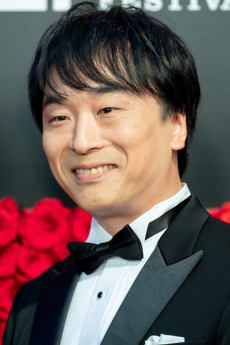
Tomokazu Seki

Chris Hawken
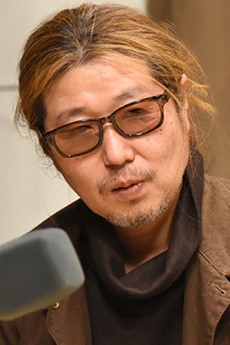
Yuuji Ueda

Sayuri Shirakawa

Aya Hisakawa
Episodes are being prepared. Check back soon.
REVIEWS

megafat
A series that could have been decent instead beats you over the head with a "take care of nature" message.Continue on AniListThe story follows Juna, who was just an ordinary high-school girl, right up until the day she died in a motorcycle accident. But in the twilight of death, she saw a vision of the future, of the barren earth destroyed by something call the Raaja, and was offered a second chance at life if she would help stop them. Now she must learn to cast aside her thoughtlessly destructive ways and face her destiny as the Avatar of Time, the one being who can decide the fate of the planet.
If you can't tell by the description, you'll know it within the first couple of episodes of the show, but the series makes it blatantly obvious as to what the message is, to take care of nature and not carelessly intrude on it and pollute it with human made machines. It feels like a first year philosophy class, and the show shoves it down your throat by the end of it. You don't have to be subtle to get a message across, but it would have been nice if the whole thing had been a little less in your face.
On top of that, the whole thing feels weirdly edited, like a lot of ideas had to be cut down to fit 13 episodes. The pacing is off and it does feel like it's rushing through some things. If it had some more space to breath, not only could everything had a much nicer pace, but characters could have had a proper chance to get fleshed out, but there was probably a rush to make it fit the 13 episode count instead of 26. Maybe the overtones wouldn't have been AS obnoxious.
Everything does look pretty nice, but it does have the thing that a lot of anime has that sticks out like a sore thumb. CGI. While it does have some decent CGI for 2001, it's pretty obvious that it has aged like nearly every other anime that has CGI from the time. It hasn't aged as bad as some of the stuff that I've reviewed, such as Nazca, but the whole thing makes a pretty good example of why CGI shouldn't be a go to for cutting costs for anime. I guess CGI had to have some growing pains, but CGI from that time in anime just makes it look a lot worse.
There is a decent idea here, but it's buried entirely under a mediocre execution. I guess it could do with a remake, make it the full 26 episodes. Sure, it would have had some filler if it had that many episodes, but I'd rather have series with filler if it meant a better overall experience than a series rushing through it's plot and character development.

AkaiShitoHat
Interesting ideas, terrible executionContinue on AniListSPOILER WARNING: This review contains major spoilers for the entirety of Chikyuu Shoujo Arjuna.
I came across this anime quite by chance and decided to watch it, armed with high hopes. After all, the Kawamori-Satelight combination is one that works, and one that is particularly dear to me (especially when I think of Macross). Instead, it was a complete disappointment; an anime like so many others that starts from an interesting premise but has a downright terrible execution. And this is all the more striking because the director is by no means an amateur—Kawamori is someone who was capable of creating an audiovisual work of the caliber of *Ai Oboete Imasu ka* at the age of twenty-five. You can understand, then, that my expectations were rather different. _______ #
**The problem with the characters of Chris and Cindy** The first major problem is a general lack of narrative clarity. *Arjuna* frequently makes use of visions, metaphors, and sententious lines without actually shedding light on important concepts, phenomena, and causal relationships, leaving the viewer, as usual, to reconstruct the narrative fabric for themselves.
Then we have characters such as Chris and Cindy, who are supposed to be “bearers of a higher knowledge,” and yet never do anything useful, ultimately becoming nothing but useless and annoying. They are practically fashioned as those classic characters whom the viewer is driven to hate with all their might: two fucking brats, smug and arrogant, who do nothing but lecture the protagonist, insulting her simply because she fails to understand what is supposedly obvious to them. And here we come to the first absurdity: if both of them (Chris in particular) are constructed as enlightened entities whose supposed task should be to lead Juna toward a deeper understanding of reality, well, this function is never actually fulfilled, because they never guide her. Apparently, Cindy justifies this pedagogical approach by saying that Chris has “faith” in Juna. I find this a highly questionable narrative choice: Chris can have all the faith in the world in Juna, but if he sees that the girl does not understand the meaning of her visions (not because she is stupid, but because, quite simply, she lacks the proper tools to understand them), there is no sense in continuing with this “communicative” strategy. Faith does not replace communication, especially—well, you know—when the survival of humanity is at stake. The grotesque result of this absurdity is that they spend most of the series telling her that she does not understand and asking her why she cannot understand; so much so that the girl's final realization seems to come through a genuine enlightenment, in a distinctly Siddhartha-like fashion.
The little brat is the classic character who seems to exist for the sole purpose of knowing more than everyone else, but who uses his knowledge primarily to remind everyone else that they know nothing. He ends up doing nothing but preaching at others; he does not actually fight the threat, he does not devise strategies to deal with it, and certainly does not put his superior knowledge at humanity's disposal.
The extraordinary cherry on top of this pile of shit is Cindy's reaction to the protagonist's eventual realization: when she realizes that humanity and nature are a single interconnected whole, Cindy herself—which is to say, the character who behaves, just like the other one, as though she possessed superior knowledge and who constantly accuses the girl of failing to understand Chris—is surprised by this conclusion… “Oh, so you're saying we're not all different? So you're saying we're all one with nature?” At this point, one cannot help but ask: **then who exactly understood what?** ______________ #
**The pseudoscientific descent** But what really made me furious is the complete “pseudoscientific turn” that the anime seems to take at a certain point, worthy of the most vulgar kind of simplistic environmentalist propaganda.
There is nothing wrong with tackling issues such as industrialization, pollution, intensive agriculture, and the indiscriminate consumption of resources. It is entirely legitimate and absolutely worthwhile, because these are real problems that deserve to be addressed. The problem arises when a work that claims to tackle these issues seriously builds its argument around false, pseudoscientific, or historically distorted claims, presenting them with absolute seriousness as though they were facts. The claim that insects supposedly eat the “bad” or deteriorated parts of plants is already emblematic, but it gets worse. Statements such as “pesticides are essentially made from waste” and that fertilizers are “made from bombs” are distortions so crude that they reduce complex historical facts to mere slogans.
Even more appalling is the claim that the common cold supposedly has some kind of “purifying” function for our bodies and that, consequently, taking medication is essentially equivalent to introducing toxins into the body. At this point we are no longer dealing with narrative simplifications, but with claims that are used to support a precise ideological hierarchy: the natural process is supposedly beneficial simply by virtue of being natural, whereas human artificial intervention is, by definition, harmful.
And the matter is doubly serious, not only because these factual premises are plainly false and misleading, but also because the anime is trying to construct an environmentalist message on top of them. This insane and simplistic hypocrisy finds its perfect representation in the ending: at the end of episode 12, the idea is introduced of sacrificing all of Japan in order to contain the threat and prevent it from spreading any further. Quite rightly, this is condemned as an expression of human selfishness. Except that in episode 13 essentially the exact same concept is proposed again, with one difference: this time the reasoning is attributed to nature. And suddenly, it becomes acceptable. Do you see the problem? The utilitarian calculation has not changed: in both cases, it is decided that part of humanity can be sacrificed in order to preserve a greater whole. The difference is that in the first case it is humanity that makes the calculation and is therefore condemned; in the second, it is nature, and the same calculation becomes almost a form of purification.
The fact that a territory was inhabited by insects in some distant past obviously does not constitute a sufficient moral justification for destroying the human population living there in the present. This is why, given the way these events are staged, it becomes difficult to accept the theological conclusion the anime ultimately reaches. The series converges toward a pantheistic conception of reality, according to which humanity and nature are not separate realities but parts of the same interconnected whole. Humanity is part of nature, and nature is part of humanity. What we eat enters our bodies and becomes part of us; what was previously “other” ceases to be so through the process of nourishment. The symbolism of food, repeated throughout the anime, effectively supports this conception. ______ #
**Incommunicability** Taken on its own, this is an excellent resolution—paradoxically, it is precisely what I would have wanted to see developed in the anime from the very beginning. The problem, however, is that this ending comes after most of the work has represented the conflict in a very different way (see above). And therefore the problem is not that pantheism is a bad conclusion. The problem is that **the conclusion fails to fully reconcile itself with the way the conflict has been represented up to that point**.
The lack of narrative clarity, the numerous concealed passages, and some of the internal contradictions become even more ironic when we consider one of the other major themes generally attributed to the work: **the fragmentation of the contemporary individual, alienation, and the inability of human beings to communicate authentically with themselves, with others, and with the reality surrounding them**.
This also fits into the broader trajectory of Kawamori and his generation of otaku creators: whereas in *Macross* one could already identify the first signs of a postmodern sensibility, still immersed in the enthusiasm and generational dream, by the 1990s the cultural landscape had changed. The creators who had grown up during that period found themselves confronting a more disenchanted society, with the fragmentation of identity, the crisis of interpersonal relationships, and young people becoming increasingly alienated both from their own inner worlds and from external reality. *Arjuna*, in its initial intentions, seems to want to portray precisely this fracture.
Human beings are no longer able to reconcile emotions, thoughts, words, and actions; they are unable to fully understand themselves and, precisely for this reason, are unable to understand others or the natural world of which they are a part. It is a very interesting theme.
The problem is that here too the work would have required greater elaboration. The discussion of language, for instance, is introduced as though language were one of the tools through which humanity separates itself from reality, but this idea is not developed with sufficient clarity. Language can certainly become a barrier; it can betray experience, produce misunderstandings, and reduce the complexity of lived experience to words. But it is also **the fundamental tool through which human beings communicate, transmit knowledge, and build relationships**.
And here we arrive at one of the most extraordinary paradoxes of the work: one of its theses is that contemporary humanity is no longer capable of communicating, and *Arjuna*, paradoxically, actually manages to make its own ideas difficult to communicate. Chris does not explain; Juna does not understand; the visions do not prove sufficient for the viewer's understanding; concepts are entrusted to aphorisms, and the aphorisms are entrusted to the final enlightenment.
It is something incredibly absurd: **Kawamori wanted to portray the inability to communicate and ends up becoming a victim himself of the very inability to communicate that he was portraying.** The work thus becomes, unintentionally, a demonstration of its own thesis. This could perhaps be considered an extraordinary metanarrative merit, but unfortunately for us, I do not believe that the incomprehensibility was a deliberate and controlled choice. Based on my experience with this anime, I believe we are simply looking at a failure of communication between the author and his audience. _____ #
**Conclusions** I am not looking at a work devoid of ideas. On the contrary: **the ideas are there**. There are interesting insights into the relationship between humanity and nature. There is a food symbolism that is effective when considered on its own. There is the theme of alienation. There is the fragmentation of the individual. There is a reflection on industrial society and on the relationship between progress, technology, and the environment. There is even, in the ending, a pantheistic conception of existence that could have constituted the true heart of the work.
But almost all of this is compromised by the execution.
The themes are often introduced without being adequately developed. The narrative is frequently obscure without it always being clear whether this obscurity is intentional. The characters who should guide the protagonist toward understanding prove to be almost completely useless on an operational level. The threat that should constitute the driving force of the story fails to elicit a credible institutional response. The final catastrophe arrives after a complete lack of narrative preparation. The sacrifice of Japan is condemned when it is carried out by humanity and essentially accepted when it is attributed to nature. And a work that claims to seriously address ecological problems occasionally resorts to pseudoscientific simplifications and outright historical-scientific distortions presented without the slightest critical distance.
It is difficult not to feel like we've been taken for fucking idiots.
COMMENTS
0 Comments
SIMILAR ANIMES YOU MAY LIKE
 ANIME2004, ComedyThis Ugly Yet Beautiful World
 ANIME2009, AdventureSora wo Miageru Shoujo no Hitomi ni Utsuru Sekai
 ANIME2012, DramaFrom the New World
 ANIME2011, ActionPuella Magi Madoka Magica
 ANIME1995, ActionNeon Genesis Evangelion
 MOVIE2006, AdventureOrigin: Spirits of the Past
 MOVIE2019, DramaChildren of the Sea
 MOVIE1984, ActionNausicaä of the Valley of the Wind
 MOVIE1997, ActionPrincess Mononoke
 ANIME1998, DramaSerial Experiments Lain
 SPECIAL2007, DramaMiyori no Mori
SCORE
- (3.05/5)
MORE INFO
Ended inMarch 27, 2001
Main Studio Satelight
Favorited by 84 Users